What we've learned exploring F1's newest track
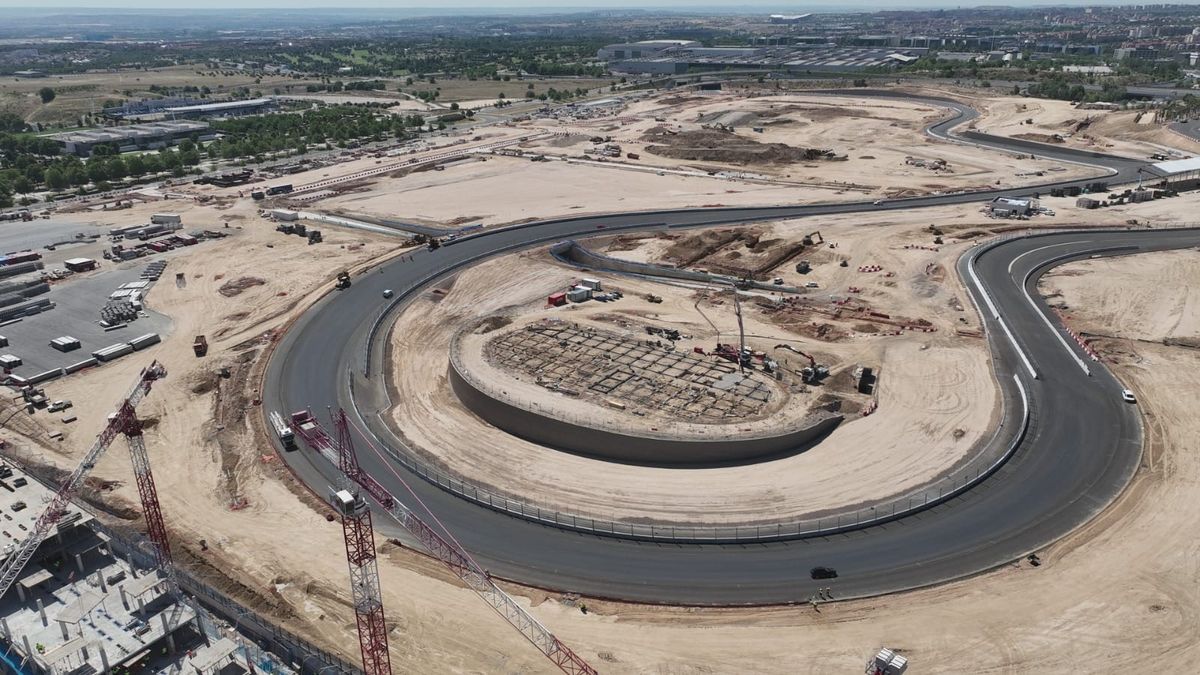
Formula 1's Spanish Grand Prix has a brand-new home in Madrid, and we've had an early look at how the circuit is coming together ahead of its first race in September.
We sent Edd Straw and Jon Noble to explore the circuit, hear from key figures behind the race, including ambassador and Williams F1 driver Carlos Sainz - here's everything they learned, including some very surprising longer-term plans.
It's not a boring flat street circuit
There’s inevitably a degree of fatigue among F1 fans about the proliferation of street circuits, many of which start to feel very familiar with their repetitive 90-degree corners and flat topography.
That won't be the case Madring, the site for which already had an elevation change even before the La Monumental banking (more on that in a moment) was built.
“We have to use existing public roads that already had this change in height, but it has integrated very well into the track to create something very unique,” explained the track's chief operating officer Carlos Jimenez.
"So it's not a boring street circuit, it's a hybrid circuit with a not-so-boring street section."
Early impressions are that it should be a significantly more satisfying track than Las Vegas or Miami, the last two street tracks to join the calendar.
But it won’t be until the cars take to the track on September 11 that we’ll really know how good it is.
La Monumental will be iconic
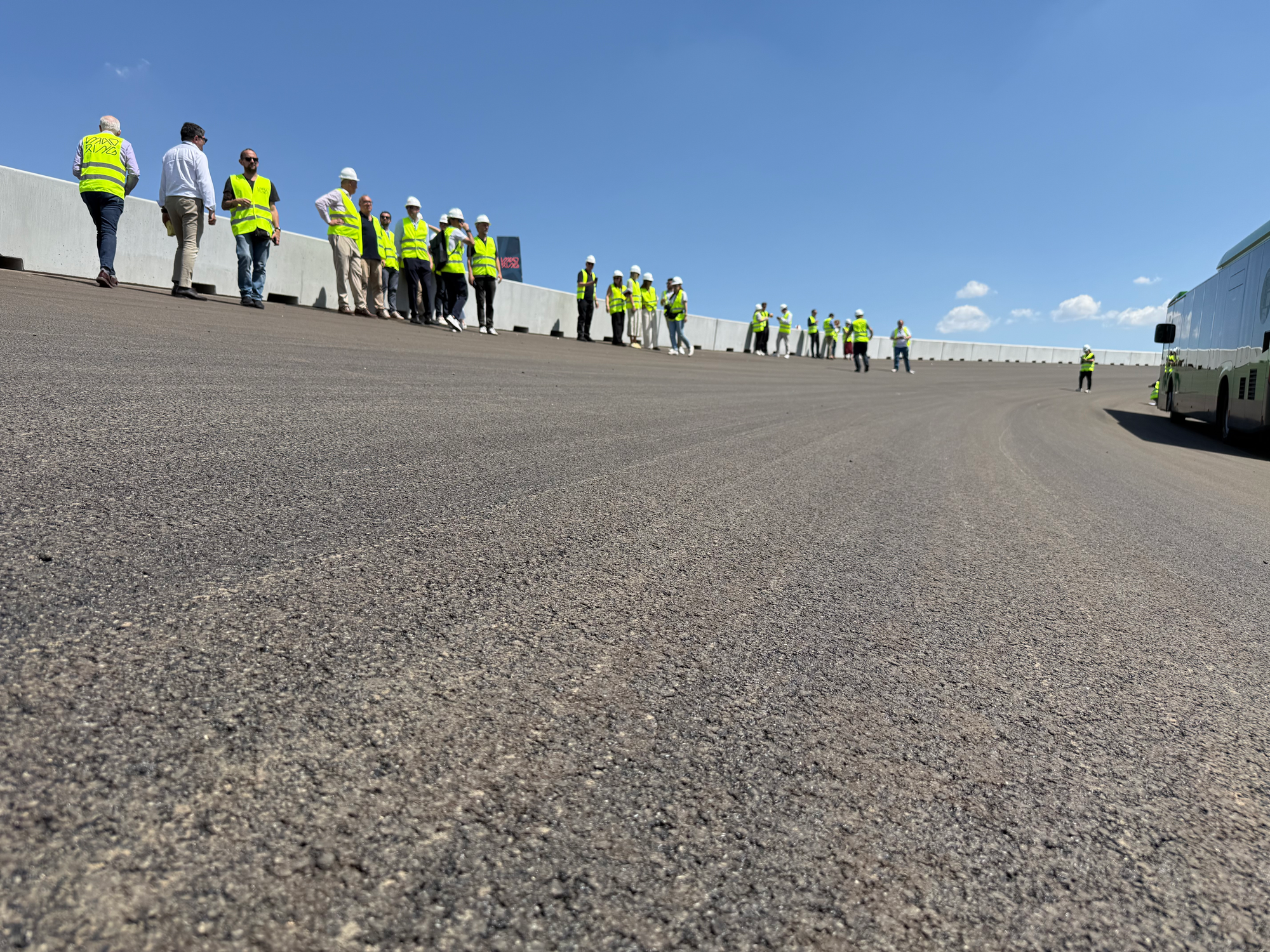
Every circuit dreams of having a trademark corner, and the banked Turn 12 is that for Madring: rising to 10 metres, with a 24% gradient (equivalent to around 13.5 degrees) and subjecting the drivers to over 4G. Once the track is complete, it will be lined with grandstands too.
Spanish Grand Prix ambassador Sainz suspects that it will be a flat-out corner in an F1 car.
“It looks impressive because we’re going to be entering that corner at a very high speed, around 180-200km/h [112-124mph],” said Sainz when asked by The Race about La Monumental.
“My feeling is the corner is going to be flat out the whole way, and it's going to create an overtaking opportunity in the next left. The banking will allow you to maybe position the car higher up or lower down if you want to get clean air to follow, but if it's easy flat it will also be a corner where you stay tight to the slipstream.
“It's not only La Monumental, the whole of sector 2 looks quite flowing, quite high speed, which I think is great to have in a street track.”
You can guarantee that on lap one of the grand prix there will be a high camera angle chosen to showcase what is hoped will become an iconic corner at the Madring.
...and F1's 2026 battery woes won't ruin it
The nature of Formula 1’s energy-starved current cars means that track layout, and especially sequencing of corners, can have a big impact on the spectacle.
Right now, a run of high-speed corners one after the other is not a good thing, as the turbo hybrids like nothing more than medium and slow speed sections to help charge up their batteries.
One of the concerns about Madrid’s iconic La Monumental banked corner was that being so high-speed it could be ruined by the 2026 phenomenon of super clipping – where cars run at full throttle but engine power is getting diverted to charge batteries.
A close look at the Madrid layout has highlighted that the tight sequence of corners before La Monumental – which includes a new medium-speed chicane – are going to be perfect for ensuring that cars arrive at the banked corner entry full of power.
So drivers should be able to deploy quite a bit of energy and run at full beans all the way through the 550-metre section.
It WILL be ready in time
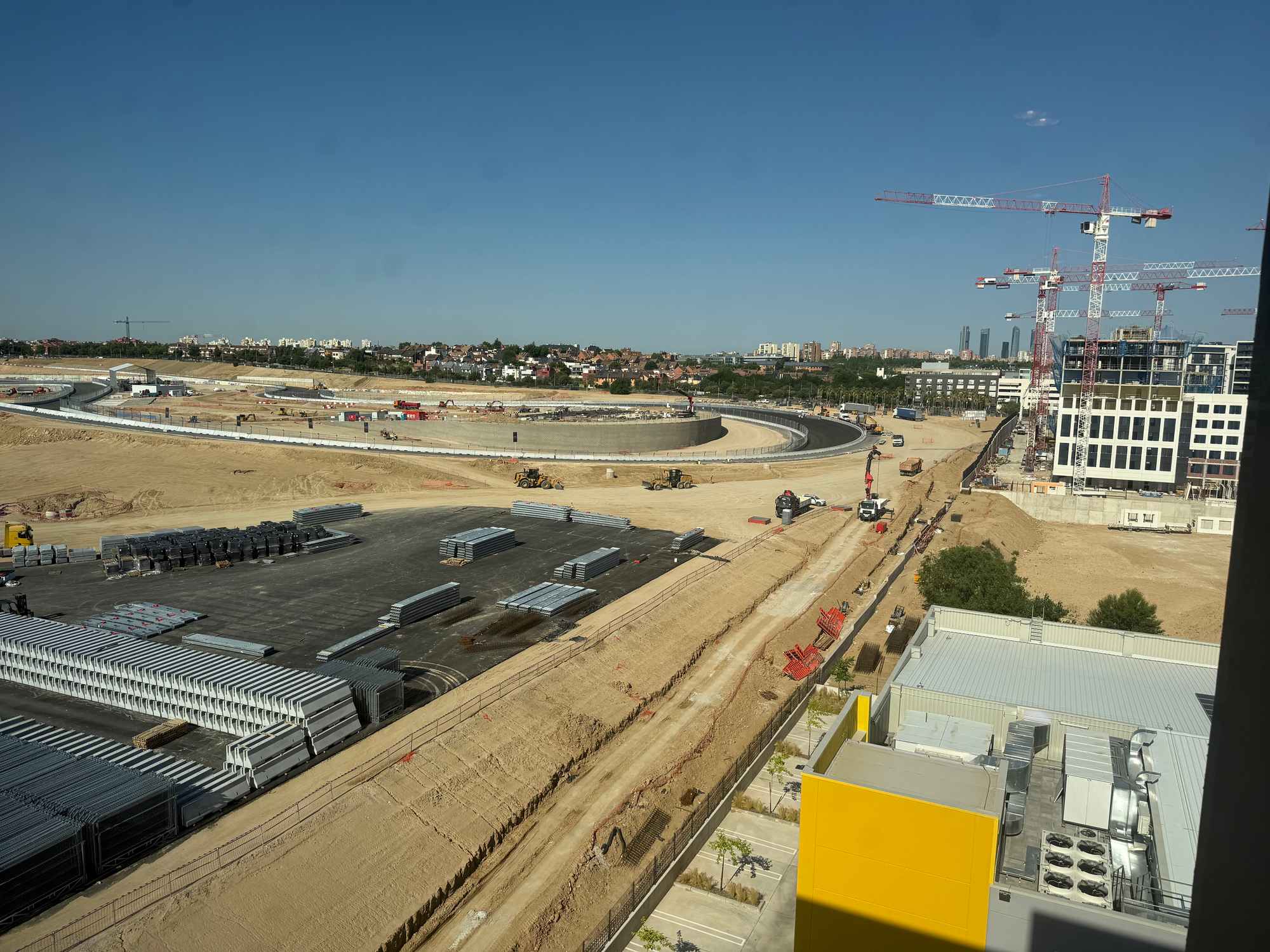
Madrid openly admits that pulling together a from-scratch street project as ambitious as it is to be ready for this year left it with a “tight” timetable.
A combination of the scale of paperwork needed to approve all the aspects of the new Madring circuit, allied to a very wet winter, has created its fair share of challenges.
But while there remains a lot of work to do to be ready by September, construction is advancing fast and there are no alarm bells ringing about the speed of progress.
Recent FIA inspections have gone well, and Madrid organisers think that within three weeks, the ground surface areas around the circuit should be finished to allow work on the temporary structures, like grandstands to begin.
As the Spanish GP’s general manager, Luis Garcia Abad said: “We have been respecting the plan, and we never had a big worry about the plan, because everything was quite well organised for us.
“The most difficult thing for us was to share activity with the normal IFEMA [exhibition centre] activities, so you have to respect the exhibitions, and we had to stop.
“But we plan everything, and we have been always on time."
Madring is two circuits in one
The Madring is a track of two halves, literally with the track bisected by the M-11 motorway with two short tunnels. The south section is built around the existing IFEMA exhibition halls and infrastructure, with the north part new from the ground up.
“It had to be like it is because we had to cross a major highway in the middle that crosses and splits the circuit, into the north and the south section,” said Jimenez. “We already have two tunnels, one is public, the other is private and was built by IFEMA 12 years ago.
“As we have to use existing public roads, those roads already had this change in the height, but it has integrated very well into the track to create something very unique, which I think is going to be very fun for the drivers. So it's not a boring street circuit, it's a hybrid circuit with a not-so-boring street section and a completely new traditional circuit with very interesting and even iconic places and sections like La Monumental.
”This means a very different character at different ends of the track. Around IFEMA, there’s the more typical street circuit section, whereas in the north it’s much more open and flowing. And it’s that section that is the main destination for the crowd, with the fanzones located in this area, while moving between the south and the north sections only possible via shuttle - unless you happen to be fortunate enough to be behind the wheel of an F1 car.
The track could one day go indoors
The Madring layout is not set in stone and could evolve over the years, with the Spanish Grand Prix contracted to run here until 2035.
The half of the track running around the IFEMA exhibition halls raises the tantalising possibility that it could, uniquely in F1 world championship history, have an indoor section.
“We can also consider having the track inside the exhibition halls,” said Jimenez. “It’s something that Formula E does in London, in the ExCel [Centre], and we are thinking about it here.”
It's not short on space, but teams still wanted motorhomes
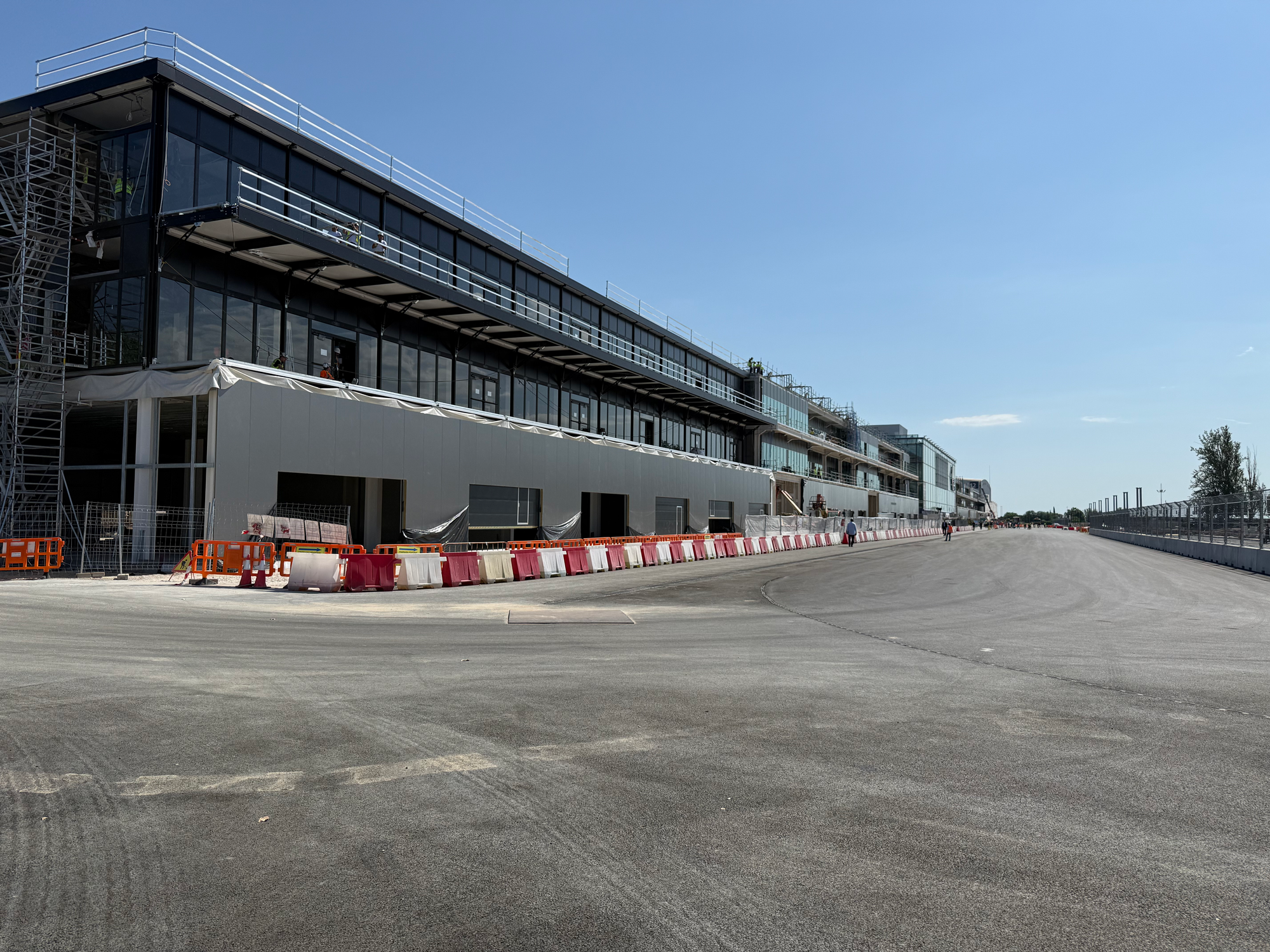
The long pitlane is spacious, with generous garages conceived to give the F1 teams all the space they could need - and more.
There’s also plenty of room for a 12th team, should one be added to the grid, while the engineering trucks will be based inside exhibition halls and benefit from protection from the elements - and air conditioning!
“The garages are spacious with high ceilings for the convenience of the teams, and we have designed them to take advantage of the infrastructure of IFEMA,” said Jimenez.
“They are connected to halls one and two. Those halls allow teams to bring the engineering technical trucks, to be behind the actual garages in an indoor space, with air conditioning in the summer, during the race, and with lots of installations that we have inside our premises for the events, including power, telecoms.”
However, there is a small walk between the garages and the area where the team motorhomes will be built. That’s something the teams pushed for, not because they wanted to stroll back and forth, but because they turned down the request of organisers not to bring the motorhomes.
Had that happened, then the teams would have hospitality areas built next to the garages, but with just nine races held in Europe, it’s no surprise they didn’t want to lose a chance to deploy their own motorhomes.
How it aims to avoid a Las Vegas teething problem
Madrid is the most ambitious F1 street race since Las Vegas arrived on the calendar.
And with Sin City’s first race weekend being overshadowed by the manhole cover problem that wrecked Sainz’s Ferrari, Madrid has elected to take no risks in a bid to avoid a repeat.
Jimenez says that the best way to achieve this was by delivering a track that eradicated manhole covers completely - something that was not easy to achieve.
“After what happened in Vegas the first year, we had to make sure that there was no manhole on the surface on the track,” he said.
“It's very complex to achieve, and we had to divert a lot of lines of services in telecommunications, power, water, drainage systems, and gas.
“That took time, a lot of planning, a lot of preparation, and that has consumed even more time than the actual construction. All the paperwork, all the permits took around 11 to 12 months.”
There are plans to turn the asphalt red
The black asphalt surface of the new Madring circuit has already been laid down, with the main areas of work now on pulling together all the infrastructure surrounding it – including barriers, grandstands and fan areas.
But Madrid is thinking of doing something totally different with the track surface in the future – potentially using red sections to give it a unique look.
Jimenez said: “It was something that we were analysing, but there was concern that, because the pigment hasn't been used before, we preferred to be relatively conservative for the first year.
“We know that we will have to repave the surface of the track during our contract period of 10 years, so probably for the next repaving, we will use the red pigment, which is a colour that represents Spain and Madrid.”
The red pigment will be similar to how bike lanes are often differentiated on public roads, and will most likely only be laid in the area of the track that is permanent – so as to avoid leading to a confusing section in the actual streets.
Fans are going to love the ease of access
A good fan experience is one of the key aspects to a successful modern F1 event – and getting spectators in and out of tracks is critical to that.
Difficult access routes, long queues and a lack of public transport options are no longer things that can be ignored.
The Madrid Grand Prix could prove to be a winner on this front with the area it is being built in – near the airport – being quite a good transport hub.
The south section of the track near the pits is served by the Madrid Metro, which is only a 10-minute hop into the main city. To the north is the suburban train line that is equally as quick.
With plenty of taxis and bus services too, Madrid should offer fans quite a good opportunity to stay downtown and get in and out of the venue with relative ease.
But the theory will only be proven on race weekend when public transport will be stress tested as hundreds of thousands of people aim to commute in and out.