Gary Anderson on McLaren's 2026 race-winning F1 upgrade
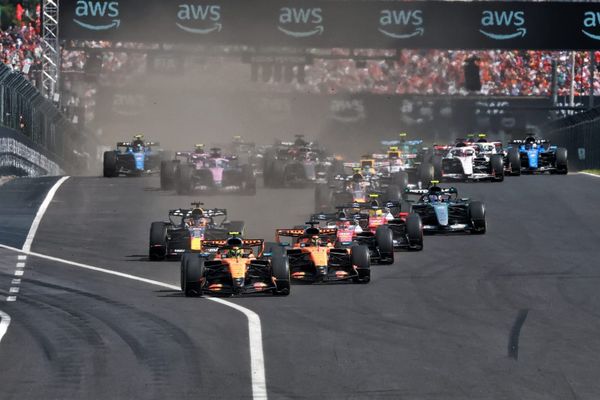
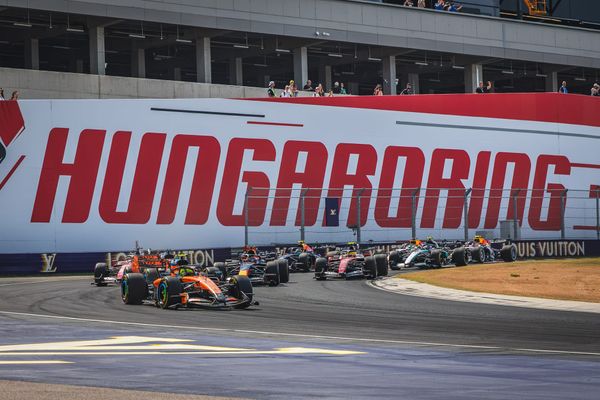
The upgrade that helped Lando Norris win Formula 1's Hungarian Grand Prix is part of what McLaren team principal Andrea Stella characterises as the need to “correct the course” with its 2026 car.
The team is playing catch-up as pushing to the end of last year to ensure it won both the drivers’ and constructors’ championship put it on the back foot. On the positive side, it has also allowed them to see rivals’ designs and understand the direction of development others have taken and possibly the reasons for their deficit.
It would be tempting to say pole position and victory at the Hungaroring proves McLaren is right on top of the regulations, but as Norris himself said, it’s going to be different at other types of tracks with different compromises.
However, this gives McLaren much-needed momentum, and confirmation that the development direction is the right one, with more parts due for the next race at Zandvoort.
So let’s have a look at what McLaren has been working on, as normal, starting with the front wing.
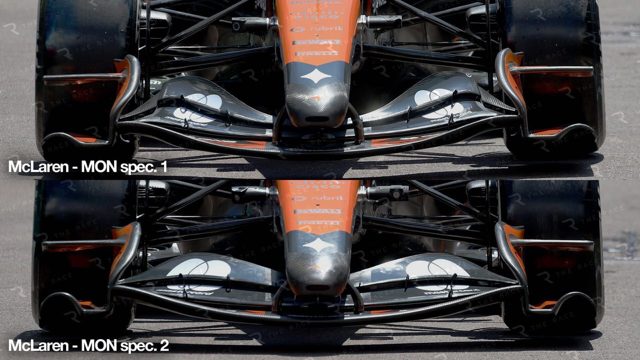
This was not actually a new part for Hungary, having actually been introduced at Monaco. It’s a revised version of the new wing first trialled even before that in Canada, but because the front wing conditions set up the airflow structures that the rest of the car has to work with, it is essentially the first part to optimise and then follow that airflow structure, optimising everything in its wake.
The wing featured a significant change to the loading across the span. You could say it’s more uniform as the airflow comes off the trailing edge of the rear flap. This means that the leading edge of the sidepods and the bargeboards will need attention to get the best out of them.
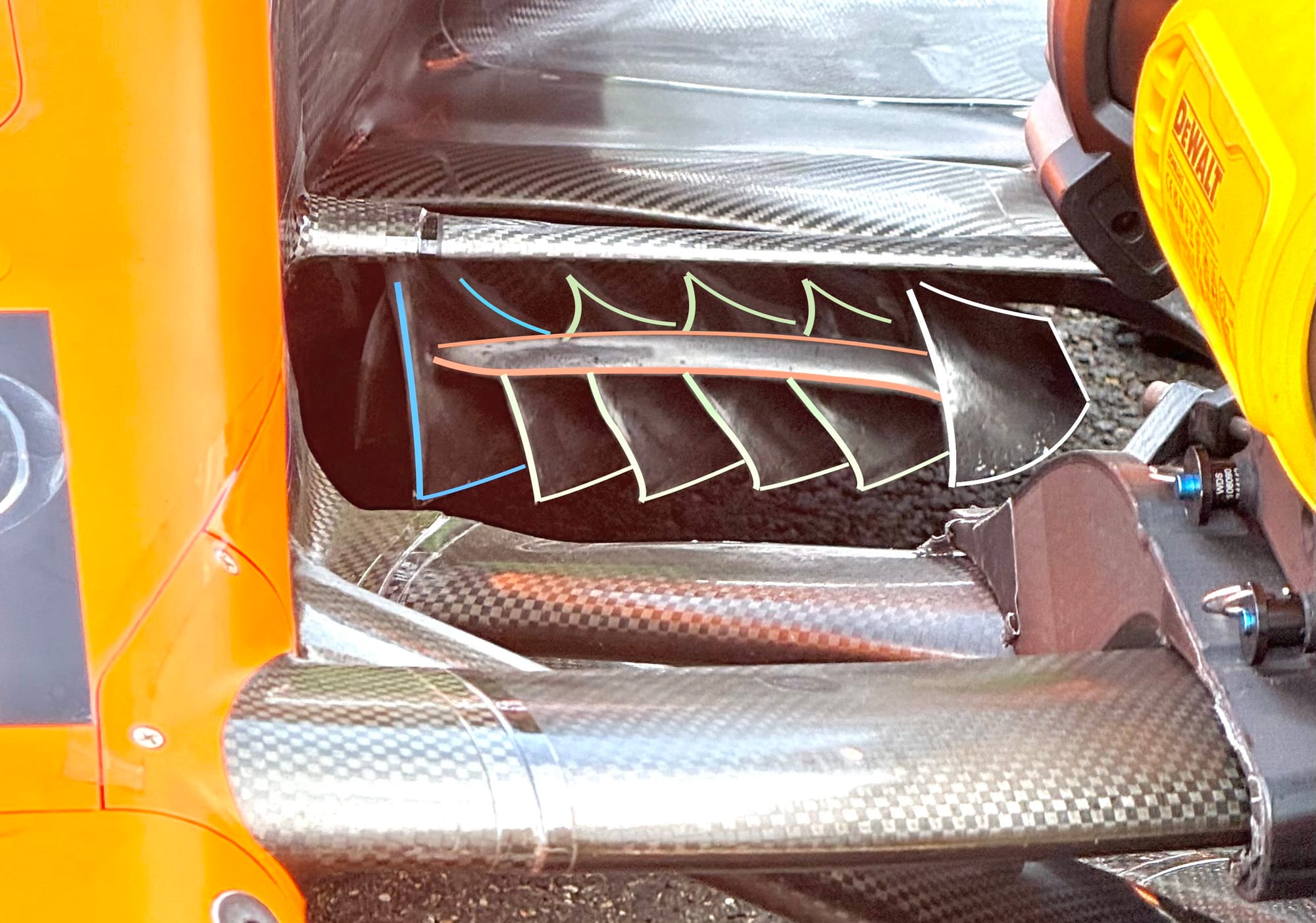
The leading edge of the floor is not new either, it has been run since Silverstone, the leading edge of the vertical splitters and there intersection with the actual floor leading edge is in light green, the inboard vertical splitter and its intersection is in light blue and the outboard one in white, all of these assisted by the floor footplate and bargeboards help turn the airflow outwards, they will produce vortices along there lower edge improving there work load.
The red-highlighted horizontal aerodynamic section is an airflow conditioner; it is designed to optimise the direction of the airflow coming off the front wishbone legs, preparing it for the actual floor leading edge.
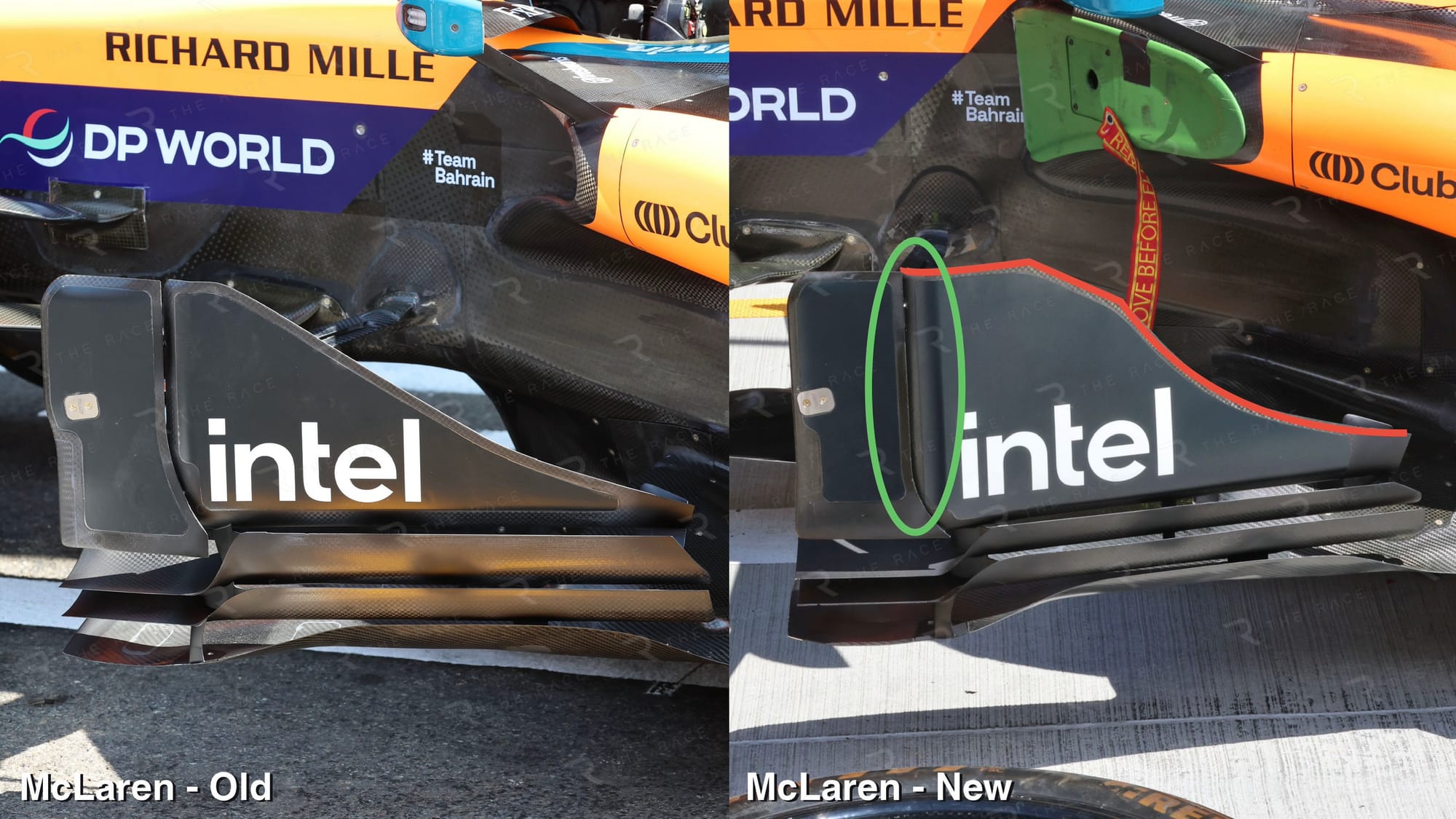
In Hungary, there were revisions to the bargeboards. Visually, you can only see small changes to the trailing edge (red highlight line), although the slot gap curvature on the second vertical element (green ellipse) looks more curved. This vertical section mainly controls the turbulent airflow wake as it tries to fill the void left behind the front tyre.
The horizontal section is actually called the floor footplate. This acts as a small diffuser pulling airflow out from underneath the front corner of the floor, but it doesn’t seem to feature any changes.
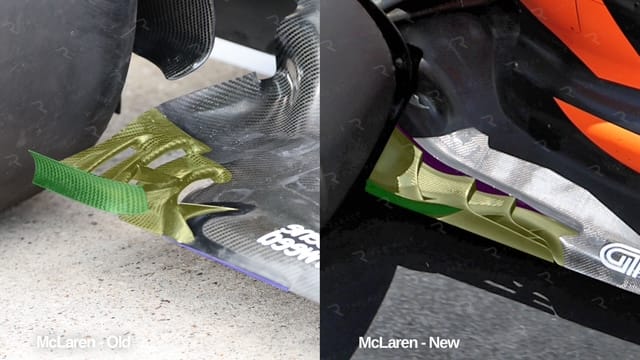
The detail in front of the rear tyres has altered to reduce the amount of airflow that is being introduced as inboard tyre squirt. The light green vanes are narrower and more sympathetic to the airflow in that area.
Also, the dark green outboard vane has been reduced in size and length. This allows these vanes to generate a more powerful flow, which will help the sealing of the underfloor in that area as the rear tyre displaces airflow when the car is travelling in a forward direction (which hopefully it does most of the time)
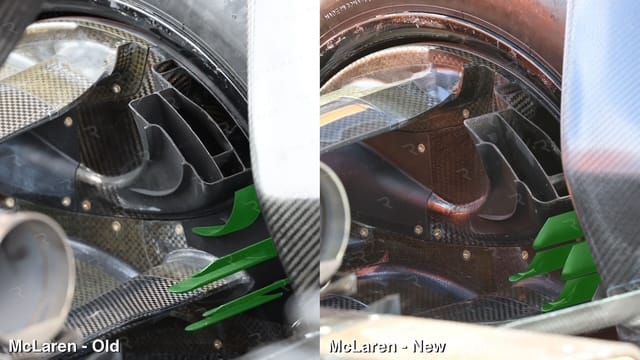
The turning vanes mounted on the inboard face of the rear brake ducts have also been altered. You also see the rear brake duct exits are divided into sections, which are connected to various different areas of the brakes that need cooling.
These components serve three positive functions.
Firstly, they help extract the hot air from the brake ducts.
Secondly, they improve the performance of the diffuser by extracting more of that inner tyre squirt and pulling it upwards.
Thirdly, they add load directly on the unsprung rear corner assembly.
Any load that can be produced by these components doesn’t have to go through the suspension medium, so that means it is applying load directly to the rear tyre contact patch.
This helps the stability of the rear of the car, especially when you hit the brake pedal and the rear of the car rises with the weight transfer and the speed reduces.
Because of the damping trying to reduce the speed and inertia of that rise in rear ride height, downforce that is being produced by the sprung mass, underfloor and/or rear wing is momentarily less than it would be at that given speed if there were no longitudinal forces involved.
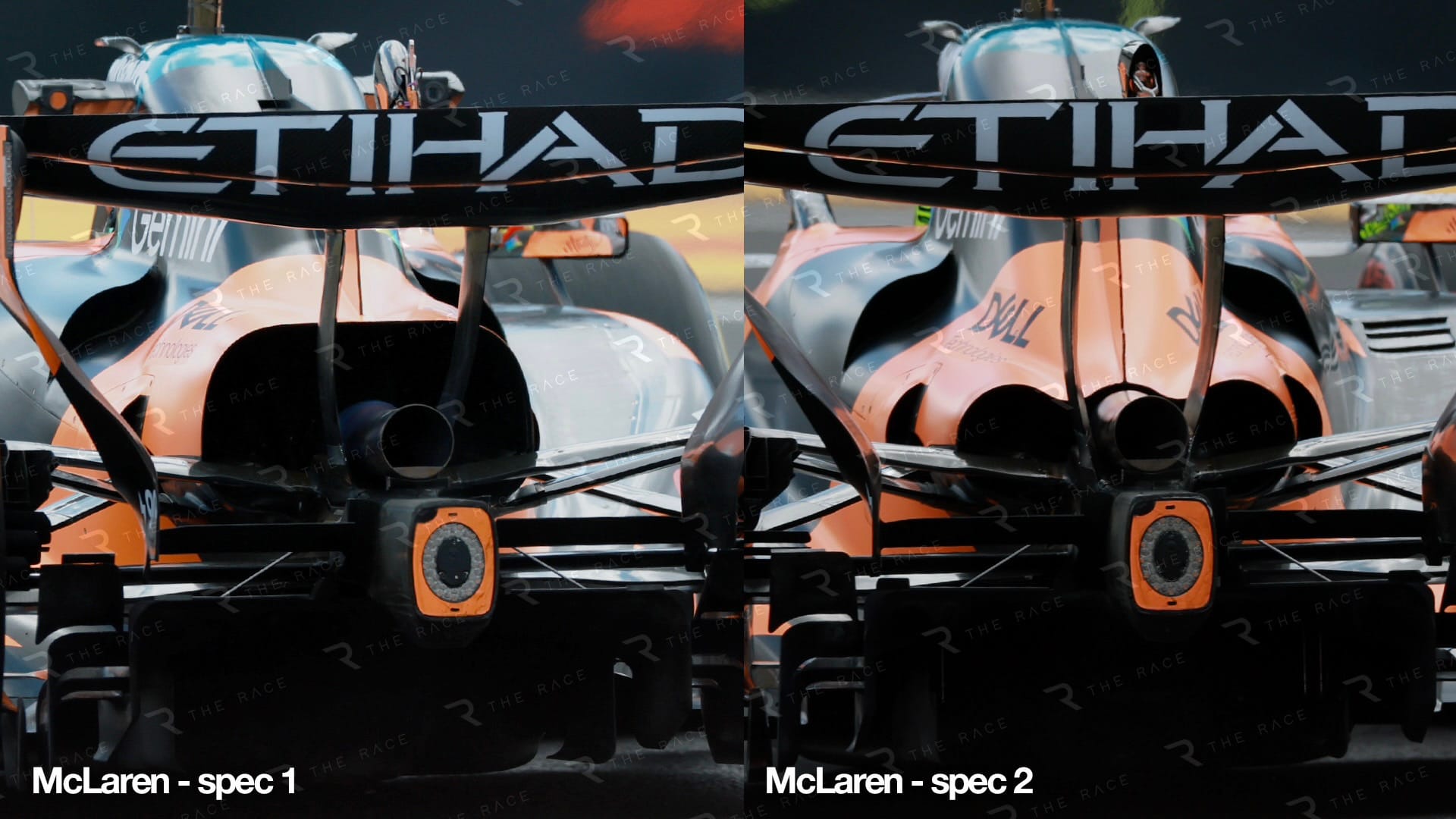
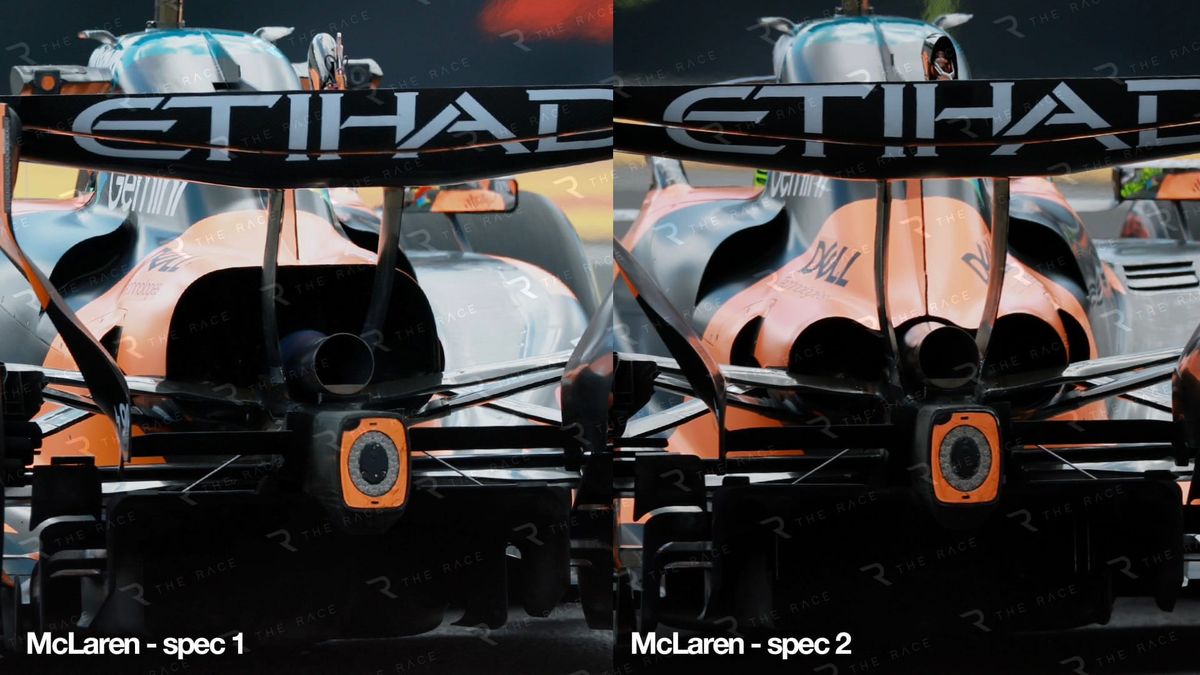
McLaren has also tidied up the main cooling exit at the rear of the engine cover. Airflow used for cooling will increase the overall drag of the car and is wasted as far as producing downforce is concerned.
The airflow structure coming off the front wing being more uniform has probably allowed McLaren to achieve this exit area reduction, which in turn will improve the efficiency of the complete package.
With hindsight, I should have written this analysis before the cars turned a wheel in Hungary as I could then have looked like a hero - if I had been positive about them, that is.
However, as far as I am concerned, none of these developments are Hungary-specific developments, so with more bits and pieces to come in Zandvoort, that should put McLaren in a good position for the second half of the season.
As an engineer, the heroes in my eyes are the men and women back at base coming up with these levels of developments, as well as those at the track extracting that performance.
The drivers should get a small mention there. However, just a small one, as this season has shown the best car is a winning car; the driver just needs to use it to its maximum. Simples!