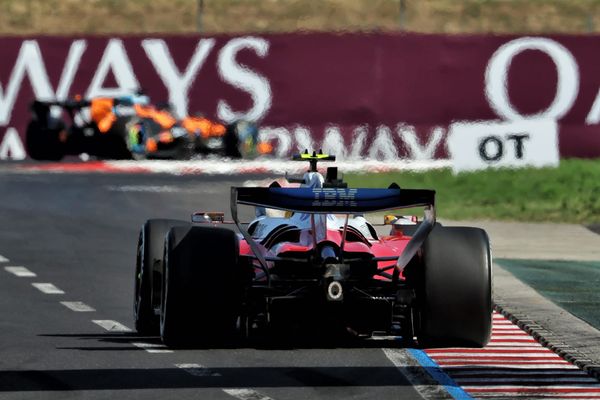
Russell's start problem wasn't actually what Antonelli thought
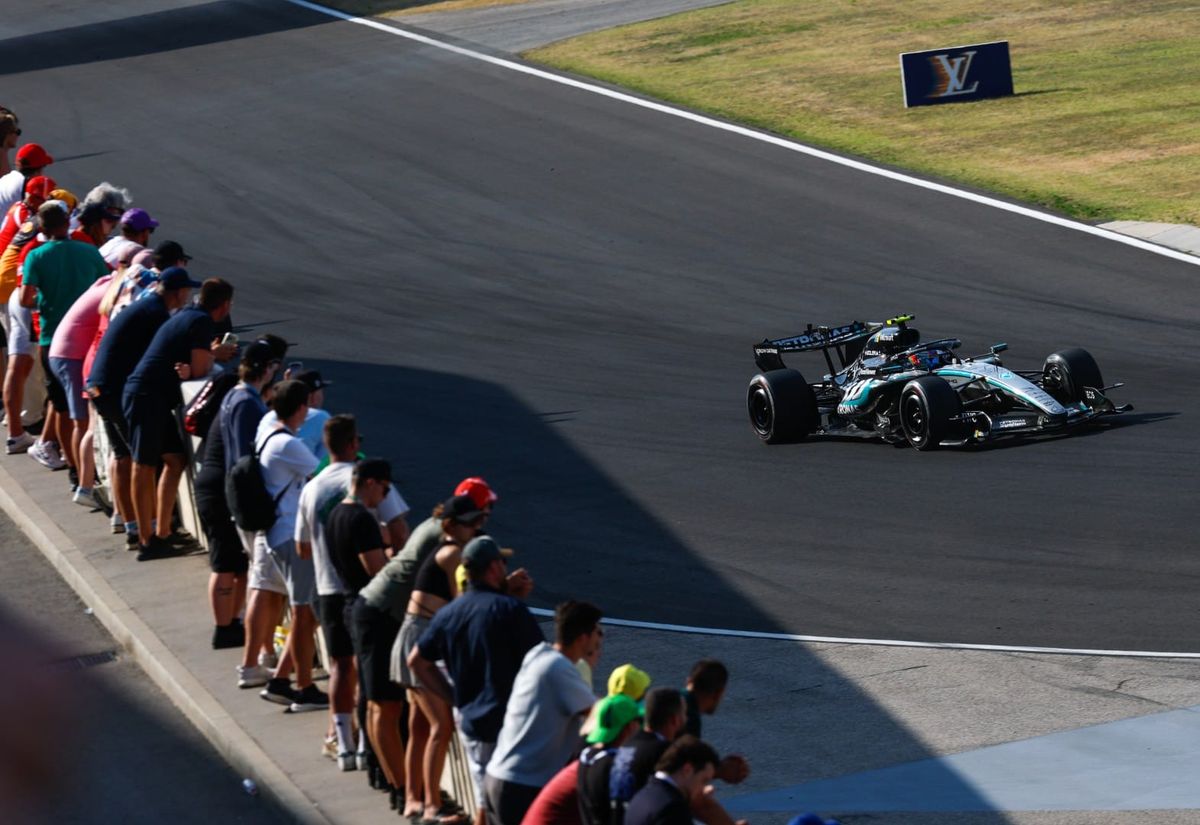
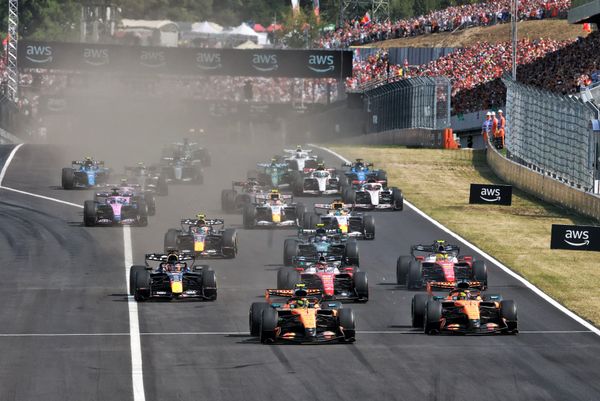
George Russell's world championship hopes took another dent in Formula 1's Hungarian Grand Prix after a disastrous start left him briefly at the back of the field.
His Mercedes had failed to get away when the lights went out, as he hit anti-stall before managing to finally get going.
Straight after the race, Russell had no immediate explanation for what had gone wrong - as he suggested his car had not responded properly to his throttle inputs during the start sequence.
"I was on the throttle holding the revs and then all of a sudden, about four seconds before the lights went out, the engine just started revving all over the place," he said.
"I was reacting with my throttle, and it was doing nothing. So, the engine wasn't reacting to the throttle."
Mercedes team principal Toto Wolff also suggested something strange had taken place.
"It looks like that he gave about 10% throttle and the whole thing revved maximum," explained Wolff. "He went off the throttle, and it bogged down.
"So, I'm really not happy about too many mistakes that happen."
The top of the pack theory
Despite no immediate answers for Russell's problems while the race was going on, initial suspicions pointed to Russell having hit the top of the battery pack and subsequently suffered the consequences of this.
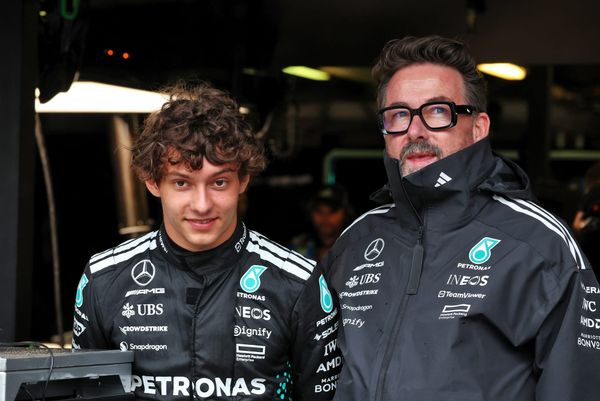
This was a suspicion that team-mate Kimi Antonelli had when he watched it for the first time in the post-race cool down room.
This top-of-the-pack issue relates to one of the big challenges that drivers have faced in trying to master the art of getting the 2026 turbo hybrid engines off the start line.
As part of the start sequence for the complicated 2026 cars, drivers need to hold high revs for several seconds to help build exhaust energy, spin the turbine and reduce turbo lag before launch.
The aim is to maximise turbo boost before the start for that critical initial launch phase, where extra battery power from the MGU-K is not allowed until the car is at 50km/h.
Drivers have to carefully manage the timing of this process because high revving charges the battery - and if it hits the top of the pack, then that can have a consequence in the MGU-K then not providing any resistance, turbo boost falling off, the revs going sky high and the fuel flow and throttle opening being cut off.
As McLaren's technical director of performance Mark Temple explained earlier this year: "The turbo spools better when there is load on the engine; free revving it while stationary doesn't provide much load.
"The MGU-K can provide a load against the engine, recharging the battery in the process, but if the battery is already full, then it can't provide a load, and the turbo won't spool well."
Rev control problem
Mercedes had appeared to be well on top of this matter since it faced issues on this front in pre-season testing, so it was unusual that this would suddenly strike halfway through the campaign.
Analysis done by the team overnight has now ruled out this being a top of the pack problem, with Russell's poor start actually being caused by an issue with the car's rev control management on the grid.
This major fluctuation in revs was something Russell had referenced and he was trying to manage it by adjusting his throttle application during the start sequence.
In manipulating the throttle to try to get things lined up for the start, Russell had the misfortune of being at 10% throttle when the lights went out.
That meant there was not enough power for a successful launch and instead the car went into anti-stall.
One factor that may have had an influence in the problem striking was that the start sequence in Hungary was longer than it typically is.
The time from the pre-start blue lights flashing to the five starting red lights going out in Hungary was around 13 seconds, which is at the upper end of the normal window.
At last weekend's Belgian GP, it was little more than 10 seconds between the blue lights flashing and the red lights going out.
Russell said that Mercedes was doing all it could to try to get a better understanding of where things were going wrong and what needed to be done to make things better.
"Obviously the problems are happening, but the whole team feels it as well," he said after recovering to seventh. "They're as pissed off as I am with how it's unfolded.
"We need to look at ourselves and ensure there's nothing we're doing wrong that is contributing to these errors.
"I've never had a season like this in my whole career, let alone my F1 career."
*The original version of this story was based on the latest information Mercedes had on Sunday, post-race - which had tallied with Antonelli's initial assessment of a top-of-the-pack issue.