Why Silverstone will bring out the worst of F1 2026
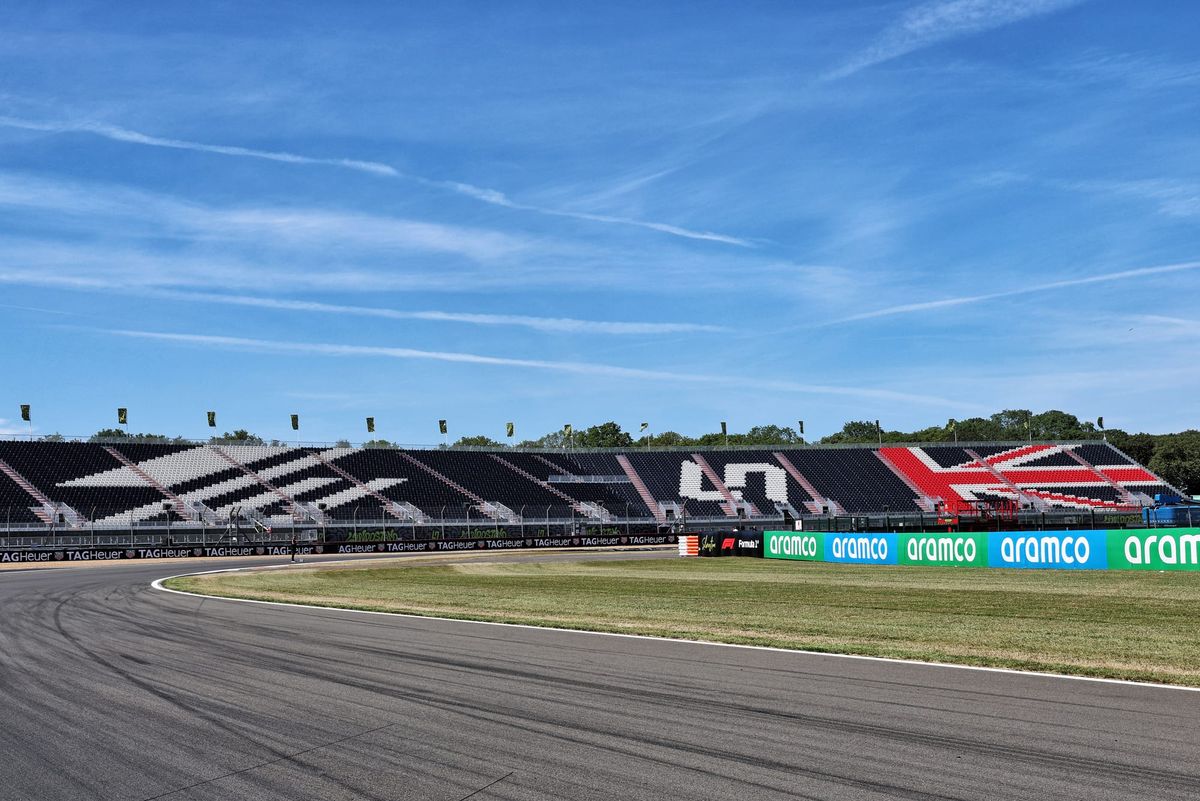

Formula 1 drivers fear that Silverstone's best high-speed section could bring the worst out of new 2026 cars - with Fernando Alonso saying it could be "quite sad".
Lewis Hamilton said the topic was something "all the drivers have been talking about" in the build-up to the race and it would be a "very different" circuit with "the power just dropping" in what had previously been some of the best corners on the circuit.
The British Grand Prix track's fast nature and quick corners such as Copse and the Becketts complex have long been standout features, but things could be different this year.
That is because the new generation of F1 cars are energy starved, and the layout of the track means there is a long run from the exit of Brooklands down to Stowe that offers little opportunity to recover power.
This means that cars will be out of battery energy long before the Hangar straight – with simulator runs suggesting car speeds fall away dramatically through the Becketts complex.
To further add to the headaches, this is a section of the circuit where the cars will be fixed in corner mode – which means maximum drag that further slows the cars as they burn through energy quicker.
There is a straight mode activation zone on the exit of Brooklands but that ends just before Copse.
The recharge limit has been pulled back from 7.5MJ to 6.5MJ for qualifying, with 8MJ in the sprint and grand prix.
Early runs in the simulator have left drivers bracing themselves for the worst.
"I think this is going to be the most unprecedented weekend in terms of the power deployment," said Hamilton.
"All us drivers have been talking in the drivers' chat about just how poor the power is going to be through this track.
"We run out of battery power, there's only a few corners to charge the engine, so the [MGU-]K will be switched off for a large portion of the lap."
Alonso said that Becketts had now become a "charging station" for the cars.
The Aston Martin driver also offered a downbeat assessment of how things will play out both this weekend and in the next race at Spa-Francorchamps.
"I think this year is going to be very different and not fun to drive," he said. "The cars, looking at the simulator lap and things like that, is going to be quite sad, I think for drivers, but also for the spectators, and vice versa."
Alonso is not alone in having had an eye-opening experience in the simulator.
Alpine driver Franco Colapinto said he was keeping his fingers crossed that the cars in real life were improved compared to how they had been during preparation runs in the simulator.
"Hopefully it's better than the sim," he said. "It was tough. I think generally it's a track that you always love driving at and that you push the F1 cars to the limit.
"Before the year started we already knew that Silverstone, Australia, Japan/Suzuka were going to be tracks that were going to be difficult with energy and that we would be running out with so long straights and with no braking at all almost.
"You're flat for 2km or something like that. It's going to be difficult. I think these corners are going to become less of a corner almost. Let's see tomorrow."
And both Haas drivers concurred.
"A lot of the tracks with the most character in the previous generation, the fast-flowing high-speed circuits now just lack reward when driving them, and that hurts a bit," said Ollie Bearman.
"And one of maybe the ballsiest sections of track of the whole year - which was Maggotts and Becketts - this year it seems to be just one corner, and the bits before you're going so slow because you don't have any power that it's not actually a corner anymore."
His team-mate Esteban Ocon agreed, calling Silverstone "quite energy-starved, to say the least" in these cars, and suggesting first corner Abbey might be the only high-speed part that could be taken in the way drivers wanted.
"The first part of the track will still be a good challenge," said Ocon.
"Turn 1, you are still going to have the deployment, which is going to be pushing you quite hard.
"But after that, it's not as rewarding and challenging as it was in the previous years."
Hamilton agreed that it will be the run from Copse to Stowe that will feel most painful
"Honestly, I think it's going to be huge. If you look at the speed traces, we start losing deployment going into Copse," he said.
"Normally the engine’s screaming as you're going into Copse, and you're holding on for dear life as you go through there flat out.
"This year, the engine will be coasting down, most likely will be downshifting whilst full throttle, trying to keep the engine revs higher. It'll be a long, long straight with no deployment, basically.
"And then Maggotts and Becketts is not going to feel the same because I think you have to lift and coast or something through there for a period of time. So it's just a completely different track.
"We'll see tomorrow. No doubt we'll still get to enjoy it through certain elements of the track where you're not power limited, but the best part of the track is those Maggotts and Becketts and Copse and Stowe. And in those places, power's just dropping. And so I hope it's something they can rectify for next year."
Verstappen just laughing
A bizarre experience on the sim was something that four-time world champion Max Verstappen had highlighted earlier in the week as he looked forward to the British GP.
"Silverstone, I love the track, but I did a few laps on the simulator," he said. "I just started laughing. It felt like a different track."
Cadillac driver Sergio Perez reckoned that Silverstone would be a huge challenge for everyone – in spite of in-season rules modifications aimed at making energy management better.
"I think it's probably the best test we face so far, since Miami," he said.
"The other circuits were not so critical with energy. I think this one is the biggest tests we are facing with these new regulations so far."
And while speed drops off on straights were a hallmark of the new generation of cars early on in the season, Alonso suggested the phenomenon is made worse when it happens in corners.
"The problem when you de-rate on the corners is also that your drag level is higher, and you have the rolling resistance from the tyres turning the wheels," he said.
"So you lose the speed by the pure drag of the car, but you lose extra speed because you are turning the car, so it doubles the effect a little bit on the corner."
Going slower to go faster
The difficulties of the fast section at Silverstone have opened the door for drivers potentially needing to drive in a counter-intuitive way to go faster.
F1 could find itself back in a situation where it is better for drivers to lift off in some high-speed corners, to help energy recovery which can be used for a speed boost on the following straight, rather than driving at the limit.
Perez said: "It's really what's more optimal for the engine, for the energy.
"Sometimes I think we're going to be finding a case where probably going slower through the corner ultimately will be faster.
"Delaying the throttle application and doing that sort of game, will be quite critical around here."
Honda's trackside general manager Shintaro Orihara said that the energy challenge of the weekend would rest a lot on how fast grip-limited corners such as Copse and Becketts can be taken.
"The most difficult point for this track is we have a severe high-speed corner and to predict driver throttle application is quite a challenging point," he said.
"We have done a few [simulator] sessions in the Aston Martin factory and we have some idea, but until we see how the driver drives at the track, it's difficult to predict how the driver drives, and that is very critical for energy management."
But Colapinto reckoned that given the way energy management worked at the moment it would be more a case of there being a lot of super-clipping – where cars are running at full throttle to help recover some energy.
"I think we will not be lifting because the way that the regs changed help us to stay flat and not gain so much by lifting," he said.
"Maybe earlier in the year we had to lift on purpose to gain energy back, and that was a way of maximising more the straights.
"I think now with the harvest reduced and all that, it kind of helps us to stay flat.
"But on the other hand, because we clip so much, we will arrive slow and that's going to make the corner easier."
Championship contender George Russell has been a rare voice in support of the 2026 rules throughout the season, and that continued at Silverstone.
He argued that what mattered most is that the fans would get to see better racing, and he doubted the energy management factor would make much difference for them.
"I think Silverstone will be great," said Russell.
"With these regs, we knew there were going to be some tracks that were more difficult than others for 22 drivers to experience. 600,000 fans here, I don’t think probably care so much about energy management.
"And on the flip side, the tracks that are most challenging for the energy, such as Melbourne, China, they have so far produced better racing than we've seen in the past at those tracks.
"And there's no doubt that tracks that are energy starved, their racing will be better, and it will be a bit more chaotic, so you could look at that as the positive.
"But for sure, a single lap qualifying is not going to be as fast as we've seen it be in the past."