Gary Anderson's theory on Cadillac's costly F1 problem
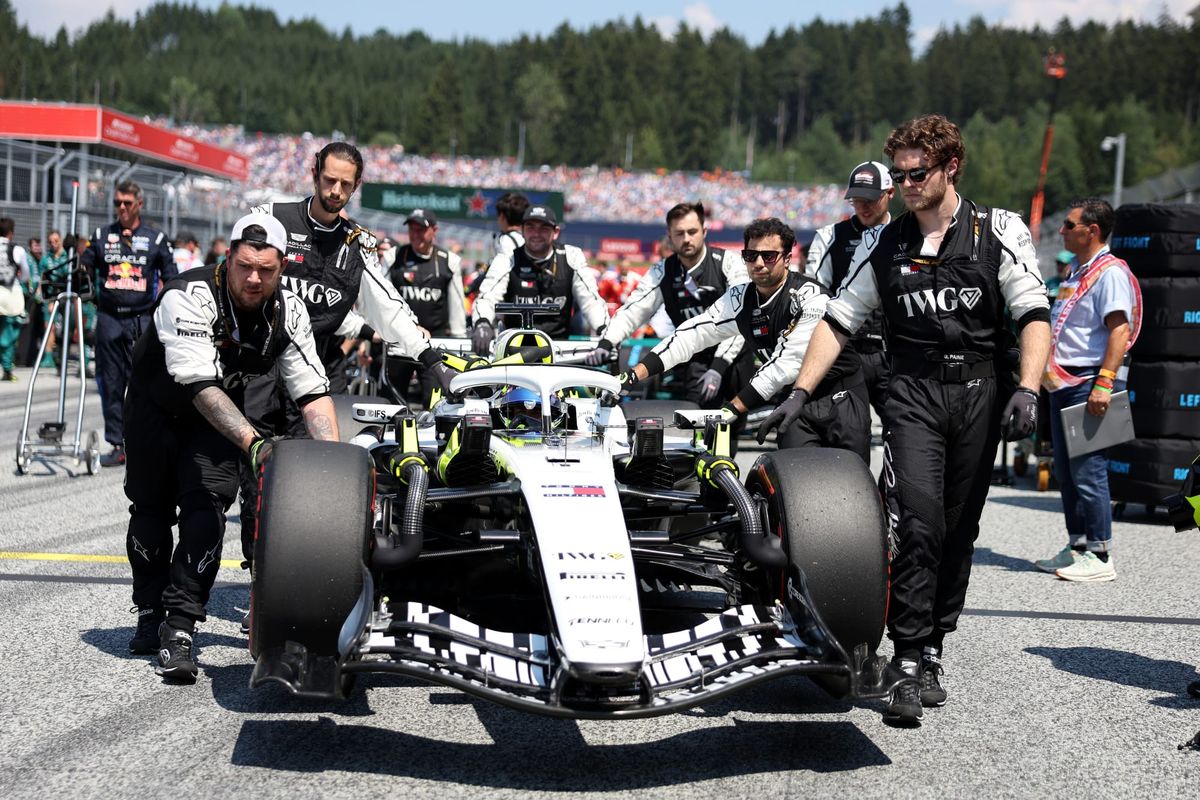
The new Cadillac Formula 1 team’s brake overheating problems led to both its cars retiring early in the Austrian Grand Prix last weekend, and it’s not the first time they it has had problems in this area.
This is something that needs fixing as soon as possible, but brake problems are never just brake problems.
First and foremost, you need the brake material to work in its operating window. You have to assume Cadillac has disc and pad material on the car that is capable of stopping it, and that it will work from roughly 300 degrees centigrade up towards 1000 degrees. Within that window, the brakes should do the job.
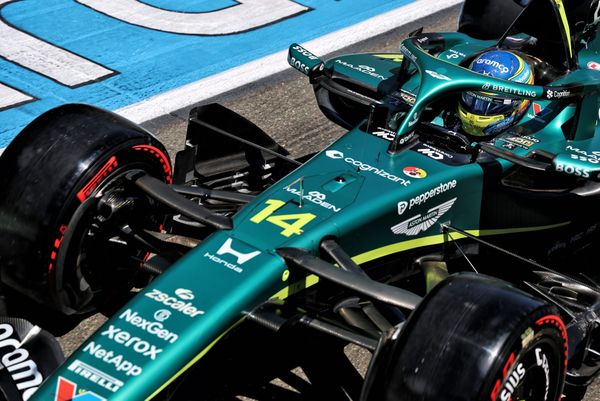
Assuming the material itself is not wrong, it’s the cooling that is likely to be the problem. The brake duct is now a very complicated piece of kit, and managing that heat transfer to the tyres is also part of the equation.
At the front, it should be less of a concern because there you are often fighting to get front tyre temperature, particularly when you put on new tyres for qualifying. You actually want some heat from the brakes to get into the rim, and from there into the volume inside the tyre.
But in the race, and especially at the rear, the objective changes. The rear tyres pick up temperature very quickly. One little bit of wheelspin and the rear tyre temperature can increase by 25 or 30 degrees. So you use the brake cooling flow not only to keep the brake system alive, but also to help manage the rear tyre temperature and keep it at the minimum level.
That is where the compromise starts. On the front of the duct, you need an inlet in a high-pressure area. Somewhere on the back or rear side of that duct, you need an outlet in a low-pressure area. Some of that airflow cools the calliper, some goes through the cooling holes in the disc, and a little runs across the inner and outer surface of the disc to keep the surface temperature under control. The more flow you put through there, the more cooling you have.
However, that is detrimental aerodynamically, because that brake duct is sitting in a very sensitive area of the car. It can interfere with the front-wing wake, the tyre wake and the flow structures you are trying to manage around the car. This means teams are always keen to minimise the cooling.
However, when you go to places like Montreal or the Red Bull Ring - which are big braking circuits - that can cause problems. Sometimes it is better to overcool a little and make sure you are covered.
Cadillac’s brake front ducts do look a bit small for those sorts of circuits. For a new team, that is not the right risk to take as its priority should be to finish races. You learn far more from finishing than from squeezing out a tiny aerodynamic gain and then cooking the brakes. And if other cars fall out of the race, you need to be there to pick up a point if it comes your way.
There is another problem too. If the pressure at the inlet is not as high as it needs to be, or if the outlet is not sitting in a negative enough pressure area, you can get reverse flow through the duct. Once that starts, it is very difficult to get rid of because the flow does not suddenly decide to change direction again just because you want it to. Then the cooling system that should be feeding the brakes becomes a system that is not really doing its job at all.
That is why it was so surprising to see Valtteri Bottas suffering a brake fire on the first lap. They have full fuel tanks, the brakes are critical, and they are at the back, so in those first few laps, if you have brake concerns you should be braking 10 metres earlier than everybody else, just to get the brakes stabilised, burn off a little fuel, and understand where you are.
For it to happen that quickly suggests something strange was going on. Given it has happened more than once, this does not look like just an Austria-specific problem, it is more than that. And the team had tried to take action to improve its brake cooling.
Cadillac does not need a miracle. It just needs to stop pushing the cooling compromise so hard and ensure it has proper mass flow through the ducts. Then, it will be finishing races.