Why Carlos Sainz is being wasted at Williams
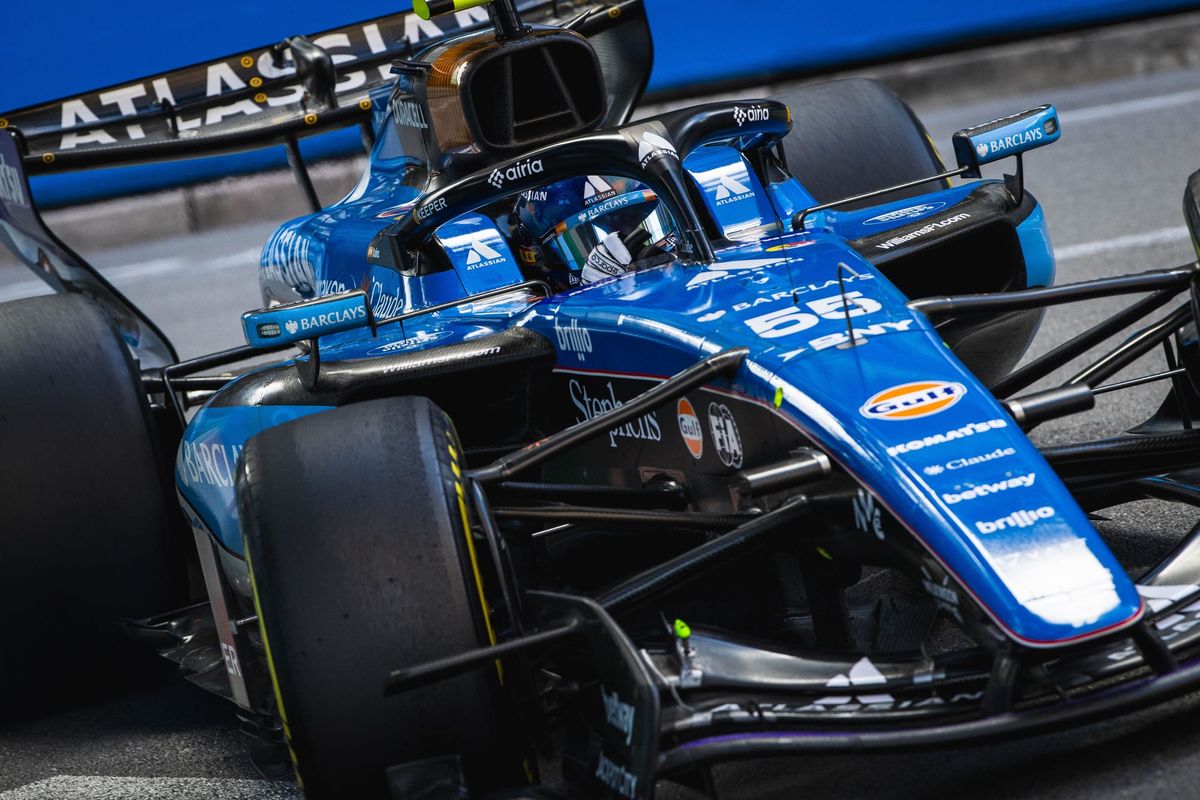
Toiling in obscurity down the field in Formula 1 condemns you to the fate of only catching the eye when you make a mistake.
Ask most fans about Carlos Sainz's season so far and hitting race leader Oscar Piastri while being lapped in the Hungarian Grand Prix will leap to mind. Yet that blunder, which drew justified criticism, is incongruous with the rest of what has been an outstanding campaign. You can even argue that this blunder was an unintended consequence of the very mindset that has allowed Sainz to thrive.
He's staying at Williams next year, partly because of the lack of credible opportunities elsewhere, but he’s made a conscious effort to leave nothing on the table this year. Partly, this is motivated by the desire to salvage what results he can, but the primary impetus is keeping his stock as high as possible.
The Williams FW48 is, based on average pace, the third-slowest car and was ahead only of Cadillac at the Hungaroring before the August break after Aston Martin's major aerodynamic upgrade.
This would be a performance-sapping experience for many drivers in Sainz's position, given he became accustomed to running at the front during his Ferrari years and Williams was expected to be far more competitive this year. You wouldn't blame him for losing that edge, and it's happened before to drivers in his situation, but he's all-too-aware of the fact that, at 31, he can't afford to back off. What he's doing now will impact his strength in the driver market, even when it comes to the longer-term future beyond 2027.
Oscar Piastri slated Sainz for "fighting Fernando [Alonso] for last place like it was the world championship" in Hungary. This is exactly the approach, dragging everything out of a limited car and fighting for everything even if your reward is non-existent, that has made Sainz's campaign so impressive.
It doesn't excuse what he did to Piastri, and there is something to the Australian's characterisation of Sainz as one of the most vocal complainers yet also one of the most criticised by rivals, but this approach has usually yielded results that are, relative to the potential of the machinery, superb.
A trio of ninth places, and just six points, is the worst stretch of his F1 career in terms of results, but based on the driver rankings I compile after each race, which evaluate each driver's performance across the weekend, Sainz is fifth so far in 2026.
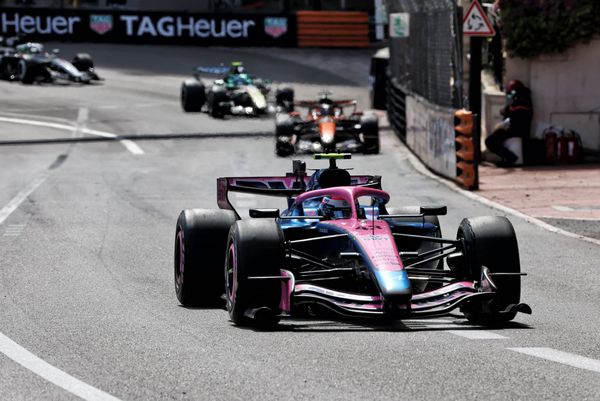
He’s often taken a Q1-level car into the second stage of qualifying, and on multiple occasions, notably when he kept Franco Colapinto's delayed Alpine behind on his way to ninth in China, he's held off faster machinery. Transplant his performances into frontrunning machinery and he would be getting rave reviews. You could even make a case that this might be his best season in F1 in terms of what he's achieved relative to the capabilities of the equipment.
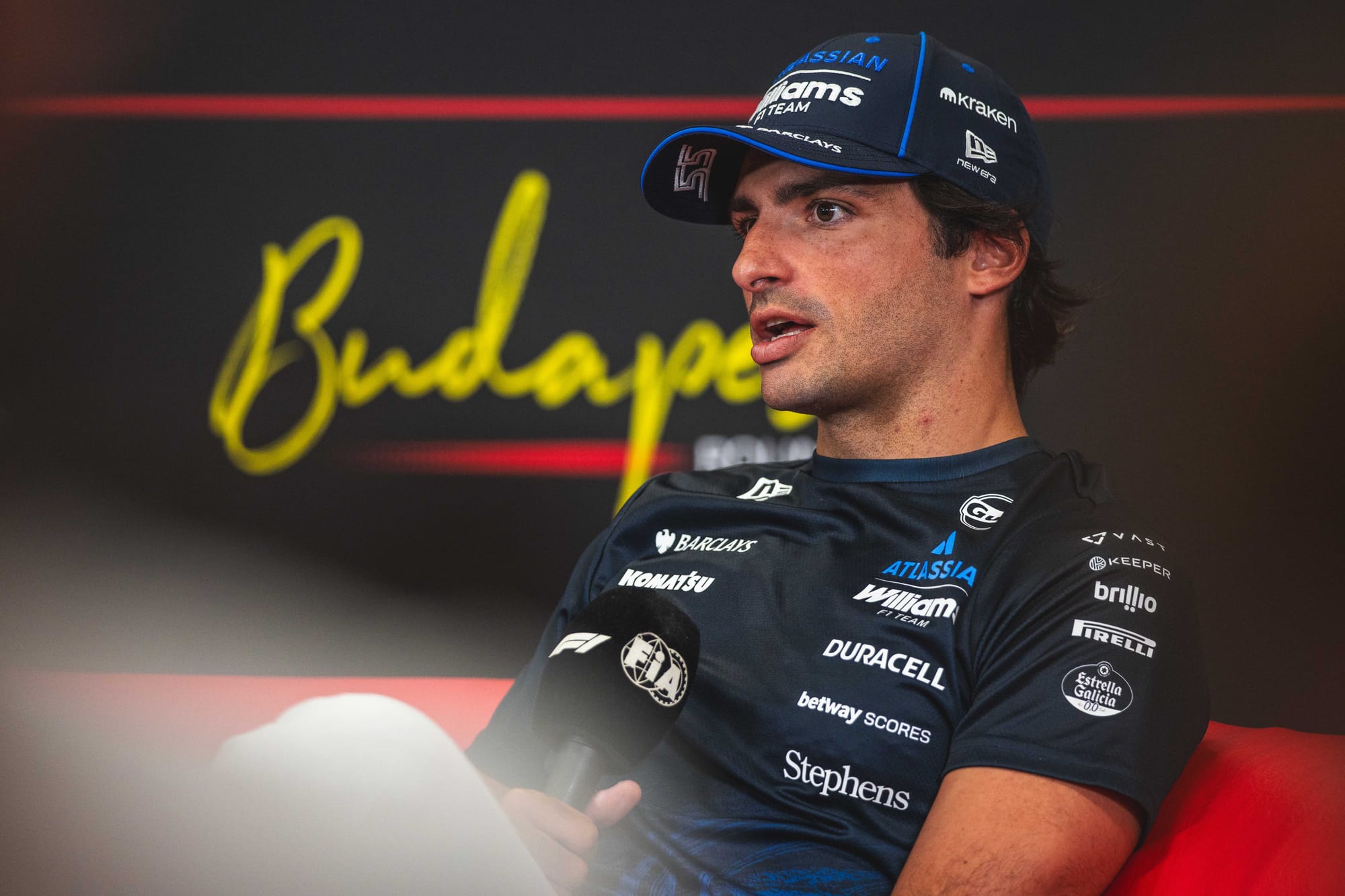
"I hate thinking like that because I'm P16," Sainz tells The Race when this is put to him in an exclusive interview in the Williams motorhome in Hungary. "It's a very 'relative' sport, but I'm qualifying P15, P16. How can you tell a fan or a reader that's your best season? It's completely counterintuitive.
"But in F1 we need to isolate what is the car and what is the driving. If I isolate the car versus the driving, it's one of my most complete seasons. Is it the best? I rank probably my McLaren seasons as my best in F1, 2024 with Ferrari, the second half of Williams in '25, and this year."
He's reached the second stage of qualifying 10 times out of 15 and only been outpaced twice by team-mate Alex Albon (whose "new" Williams deal was announced on Tuesday), on both occasions by thousandths of a second. He's also produced race results at or close to the ceiling of what a Williams can do.
Asking Sainz what stands out to him sends him in an unexpected direction, particularly within the context of his well-earned reputation as being a cerebral driver. The way he talks about his driving in qualifying in particular points to another underrated part of his skillset.
"It's the combination of race weekend preparation together with my engineering team," says Sainz. "We've done a good job on understanding the energy management, developing the set-up around trying to make me feel comfortable, and understanding the tyres to put the lap [in] when it matters at the end of Q1.
"I've always been relatively good in Q1, it's been always one of my strengths to do very good laps early in qualifying, I've actually never been a fan of five sets [of tyres] in quali, because it's perfecting rather than going all out and putting a lap [in].
"It sounds weird, but I'm more of an instinct driver. I benefit more from Q1s than running through all the sets until Q3, which is just [about] putting everything together. Maybe that's playing a bit in my favour.
"But it's a good engineering team, a second year with them and we're understanding each other better, knowing what I need from the car, from the tyres and from the energy management. It's a typical transition in a second year with a team, you normally become one tenth quicker."
The reference to driving on instinct inevitably demands a follow-up. Sainz puts meat on the bone by explaining that the work done out of the car is to allow him to drive as he wants on instinct once behind the wheel. In short, this makes it easier for him to get into the flow state where any athlete does their best work, relying on subconscious processing.
And these lower-downforce cars, which require a driver like him who is comfortable dealing with the tiny 'microslides' to get the most out of them, appear to have played to his strengths.
"I'm a very hard worker behind the scenes, but then as soon as I put my helmet on and I jump in the car, I rely purely on instincts and I don't think that much inside the car, unless it's for strategy," says Sainz.
"I do like keeping a thought for strategy, but when it comes to feeling the car and driving the car, I'm very instinctive and I like putting the work [in] beforehand. I don't know if that's helped me or not this year. With energy management you need to put in the work, but for everything else I rely more on instincts."
While it's perhaps no surprise that Sainz has been one of the best at adapting to the new cars, it's worth remembering that the ground-effect machines weren't to his liking. While Ferrari team-mate Charles Leclerc modified his braking style right from the start of testing, it took Sainz time to tune himself into them. And he never felt as if he was able to drive on instinct, keeping himself on a tight leash to get the best out of them.
"The way I've approached it is I'm just going to drive natural," says Sainz of the '26 cars and his style. "I never drove the ground-effect cars naturally, I had to change my driving to adapt and be disciplined with some of my driving techniques. When I started this year, I said, 'Clean sheet of paper, I'm going to forget the ground effect and I'm going to go back to driving as natural as I can do and see where this brings me'.
"After a couple of tests in Bahrain and then the first race, I saw my natural style seemed to give me quite a good level of speed and I said, 'OK, from here I'll do what the energy now is asking rather than the set-up or the driving technique'.
"With the energy, they say the minimum speed is important, they say pushing the entries and not caring about the exits [is important], but if I look back I've always been someone that gets good exits out of corners and I don't see I've been too penalised with these regs by going early on the throttle. It's an interesting question because, at least for me, I would have thought then I would be slow, or relatively slower because of that, and I haven't felt that in particular."
Sainz describes his approach to understanding dialling into the new machines as "not overthinking it", and that the "thorough analysis" of it can wait until the end of the season.
That's easy to say when things are going well. The opposite is likely true of those who are struggling, including pre-season championship favourite George Russell, and perhaps also Sainz's Williams team-mate, Albon.
Albon has run into more than his fair share of problems in an already-troubled season for Williams, but his style hasn't gelled so well with the cars. Not that Sainz is sticking the boot in.
"Alex has had weekends where he's been really, really competitive this year and then in qualifying maybe hasn't put it together because of multiple factors that we are struggling with, with the car and with the consistency of the car," says Sainz.
"Maybe there's been other weekends where he's been a bit more off, but honestly I wouldn't doubt Alex. In every corner I do, every lap I do, there are data points from him that I'm always copying or trying to improve. There's never been a lap that he's more than a tenth off or two tenths off and I'm always using him as a great reference.
"It's just more that I believe with a second year in the team I'm settling in and even by the second half of last year I was already performing at a much higher level and the level I know I can perform. It just takes time. It takes time to adapt to a team and to get into bed with your engineer, with the set-up, with everything you want to do."
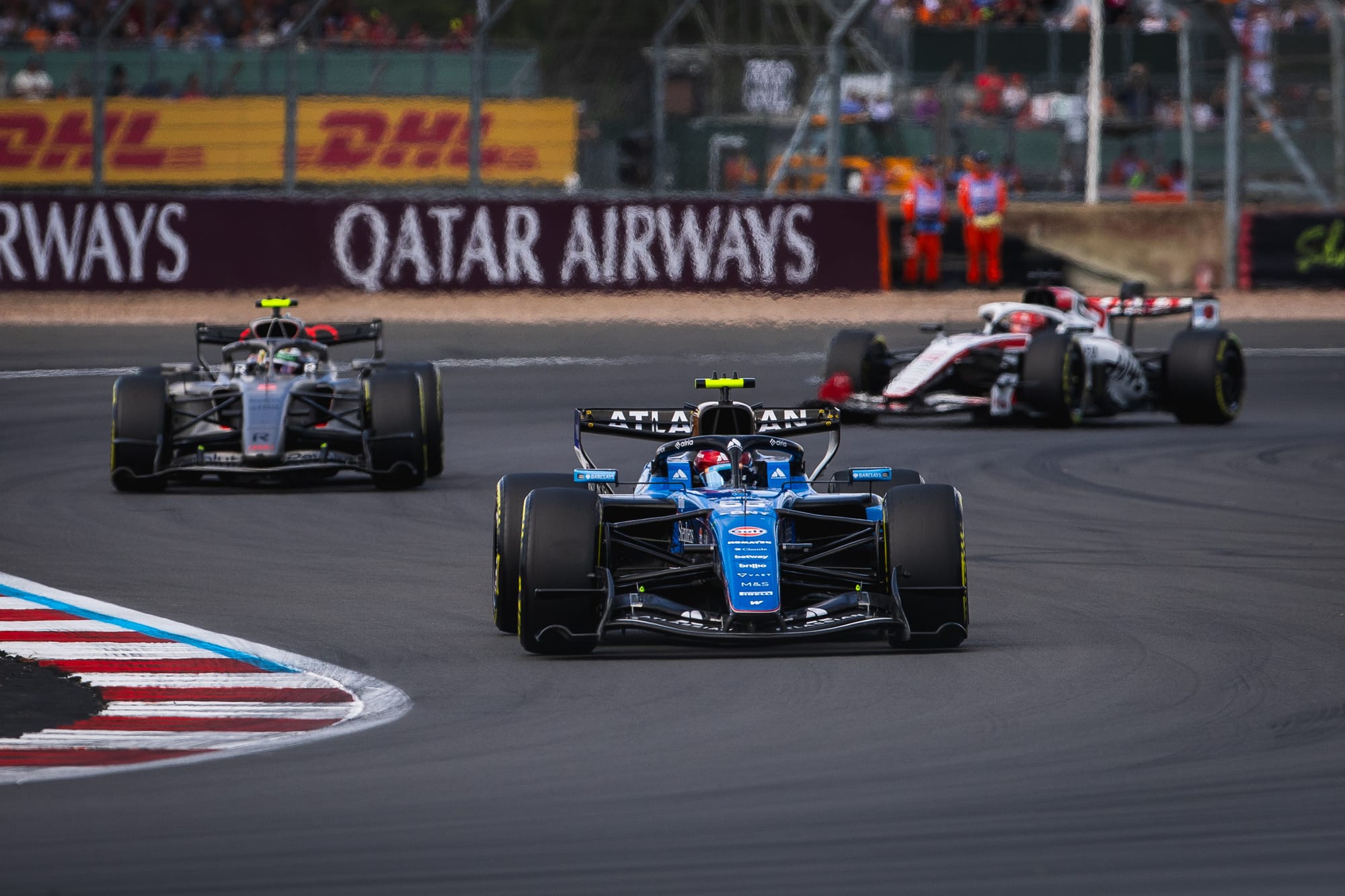
Sainz has been critical of the 2026 cars, and shares the concerns of some of his rivals about the apparent randomness of deployment at times. Earlier in the season, he described the regulations as "not good enough for Formula 1", even though the change has arguably been to his advantage.
"If you're naturally quick with these cars you can still get away with the randomness," says Sainz. "I think everyone's getting randomness, no driver out there is not getting randomness, but if you have the underlying speed, most of the time when it matters you get the laptime out of it.
"We all hate the randomness, we all hate to be down one or two tenths on some straights suddenly, but if you're coming from a strong sector one and two you can still make it through that qualifying section if you are on a good lap.
"Also, one thing that I'm feeling is this year the gaps are too big to make a difference as a driver. Last year you would go into Q1 and you knew you could beat all the other 19 drivers with a good lap. This year, unfortunately, you can only beat maybe one Alpine or one Audi or one Haas if they get it wrong. Drivers are making less of a difference because the gaps are bigger between teams."
That's one of the key reasons why Sainz's performances have gone under the radar. Grafting in the lower reaches of the F1 field is part of the problem but, when even those outstanding qualifying laps rarely elevate him higher than the eighth row, it's hard to make an impact. Unless, of course, the impact is a literal one with the race leader while you're being lapped.