The strange nature of Audi's early F1 problems
Audi’s start to life in Formula 1 has been underwhelming in terms of results, the team scoring just two points so far. Yet pace in itself hasn’t been the trouble. Instead, it’s been weaknesses in other areas that have prevented it from achieving the results its speed would merit.
Unfortunately, in F1 speed alone is not enough and there are other problems that mean what’s been the seventh-fastest car on average has produced nothing more than Gabriel Bortoleto’s ninth place in the season-opening Australian Grand Prix. That leaves it ninth in the constructors’ championship - rather than in the mix for sixth with Haas and Racing Bulls.
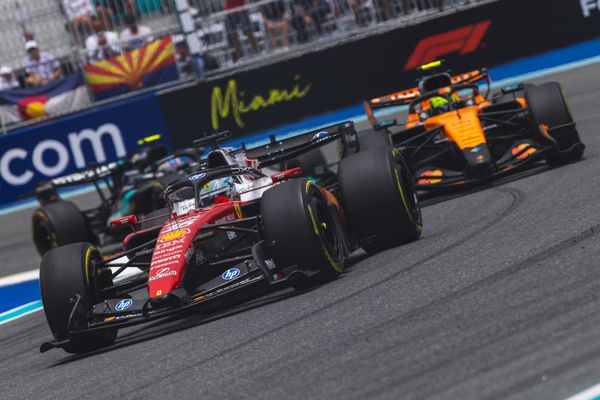
The recent Miami Grand Prix weekend encapsulated the problem, with the Audi R26 leading the four-team midfield gaggle behind the big four and Alpine in both qualifying sessions yet leaving the USA with nothing more than a 12th place in the grand prix.
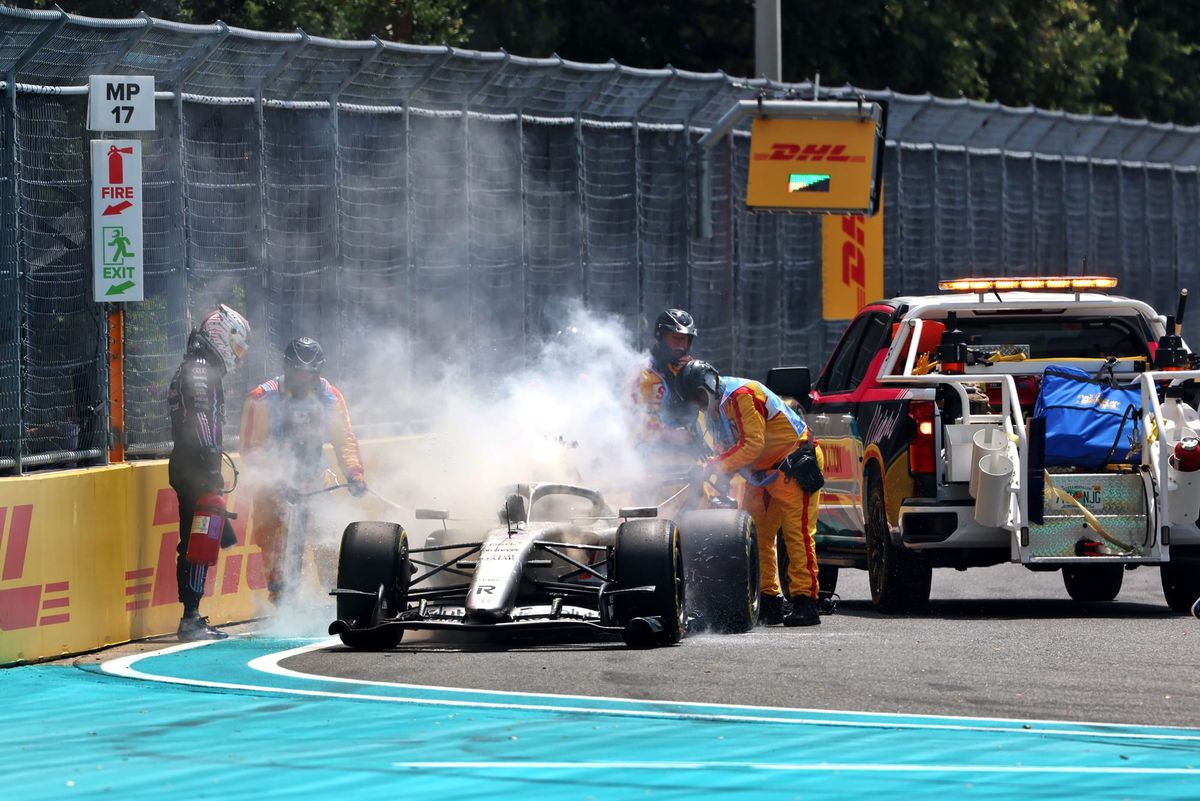
Unreliability has been the biggest problem. Nico Hulkenberg failed to start the sprint race in Miami after his car caught fire on the way to the grid - the third time in 12 races this year that an Audi has failed to start. Racing director Allan McNish indicated that was more a simple operational error than a fundamental reliability one, with a fluid leak the cause.
"There was fluid and that went onto the exhaust and [caused] the fire," said McNish when asked by The Race to explain what happened. "There was a problem prior to going out. We thought it had actually been sorted out but it hadn’t been and there was more fluid in there. It’s quite a simplistic explanation."
That’s the kind of mistake that needs to be eliminated. The same applies to the spike in intake air pressure exceeding the 4.8 barA limit that led to Bortoleto being excluded from 11th in the sprint race. This was attributed to high temperatures and described by McNish as "not performance-beneficial", but he also accepted that "the penalty is in or out and that’s the rules".
There were also reliability problems related to the main event. Bortoleto was late starting qualifying, managing only to get one slow lap in thanks to a brake problem that subsequently led to a small fire, after a gearbox-related problem was detected late on. That was partly down to the distraction of Audi having to repair Hulkenberg’s car after his fire.
The grand prix was short-lived for Hulkenberg, who suffered front wing damage after leaving his nose in on the inside of Carlos Sainz at the first corner, pitted for a new one and then retired after seven laps. This was unrelated to the contact, instead the result of getting stuck in first gear under the safety car, a problem referred to by McNish as a "drivetrain overheating situation".
Bortoleto, meanwhile, drove a strong race but was always up against it when it came to being able to score points. He recovered to 12th place - but as McNish pointed out his performance indicated he would likely have scored points had he started where he should have done on the periphery of the top 10.
"If he had started normally from where he could have qualified, in and around that 11th place, he would have finished in the points. Same with Nico, if we had a clean race there," said McNish.
"Performance-wise, it’s clear that through that first sector we were looking strong. When we came up on traffic, it was not as easy to get past people as we’d like, but hopefully we’re not in the position where we have to overtake them. Gabi drove a really good race, a balanced race, and managed everything pretty well, and I don't really see him being able to finish any higher."
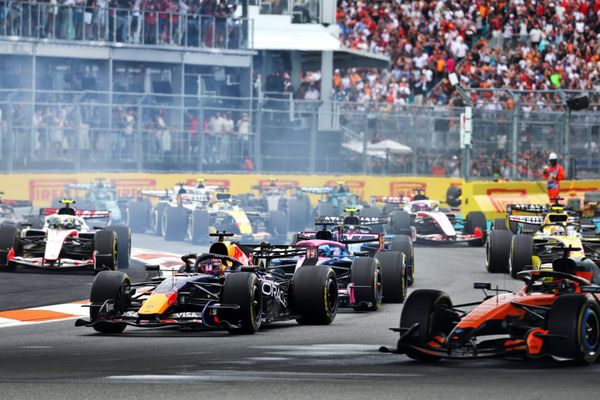
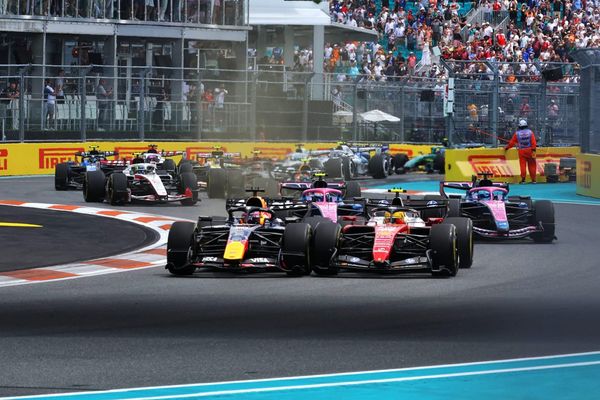
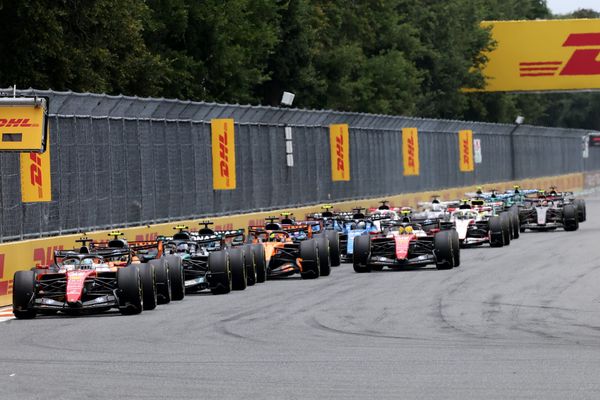
This also showcases problems with what might be called the raceability of the Audi. It’s well-known that the car has start problems thanks to having what is understood to be the largest turbo of the engine manufacturers in F1. That’s good for power, but not for responsiveness. That might also play a part in the difficulty in overtaking, although that’s also related to the characteristics of its ERS that mean it doesn’t have the most efficient deployment.
While work has been done to improve the starts, with plenty of practice starts in the Monza filming day that took place before Miami and tweaks being worked on within what is permitted to mitigate the problem, it’s characterised as a long-term project to solve this and likely something that will hinder Audi throughout 2026.
However, reliability and operational errors are a more pressing concern.
"Obviously, we don’t want them, that’s for sure," said McNish when asked by The Race if these aspects are at a lower level than anticipated even for a new engine manufacturer. "But a lot of PU manufacturers are having some issues, it’s not just hitting us. If I look at the starts of Kimi Antonelli, for example, if I look at a few other deployments, there are a lot of areas that everybody is trying to manage and control and also learn about.
"And certainly, we learn about a lot more than some of the others because they are already in the system [of F1] understanding 75% of it. Definitely, we need to tidy up those, there’s no question about it."
Audi can partly be excused for this given it’s new to F1 power unit manufacturing, although given Sauber was a well-established team operational errors in the garage are less excusable. However, some of these problems are likely legacy ones for a team still rebuilding, and that didn’t make the most of its runway into becoming Audi in a deal originally agreed back in 2022.
What’s noticeable is that the problems are generally not recurring ones, which supports the notion that it’s more about Audi hitting troubles it has not encountered before and must learn about. And as Bortoleto pointed out in Miami, that’s partly down to Audi’s accumulation of data relative to some rivals being slowed by not having any customer teams.
"I don't think we had a single issue that was similar," said Bortoleto when asked by The Race about Audi’s litany of problems. "We had many this weekend, but we haven't had one that was the same. It's just that the first weekend of the year I had zero problems, and then you go to the second weekend, you have three, and then you go and you have zero again. And it keeps going like this.
"Until everyone gets mature with the new regulations, it's not easy to start the season in a good position, and then people create a lot of expectations. But things like this, they are going to happen.
"We are a new manufacturer of engines. We only have two cars. There are teams that are running eight cars with a power unit, so imagine the amount of learning you can get by having that amount of cars. We have only me and Nico, and sometimes one of us is not finishing the race. So we just need to be patient - and when it will be fixed, I'm sure it will be good."
There have been positives for Audi. Its pace has been impressive at times, making it a consistent Q2 car that has also appeared in the final stage of qualifying twice. The power unit performance is credible for a first attempt, and there are upgrades coming in Canada after only introducing some minor updates in Miami to the front brake ducts, front suspension shrouds and the floor edge/diffuser.
With improved operations and reliability gains, the Audi R26 is a car that has the potential to emerge as a consistent points-scorer as the season progresses.