What's being changed after F1's Malaysia software bug debacle
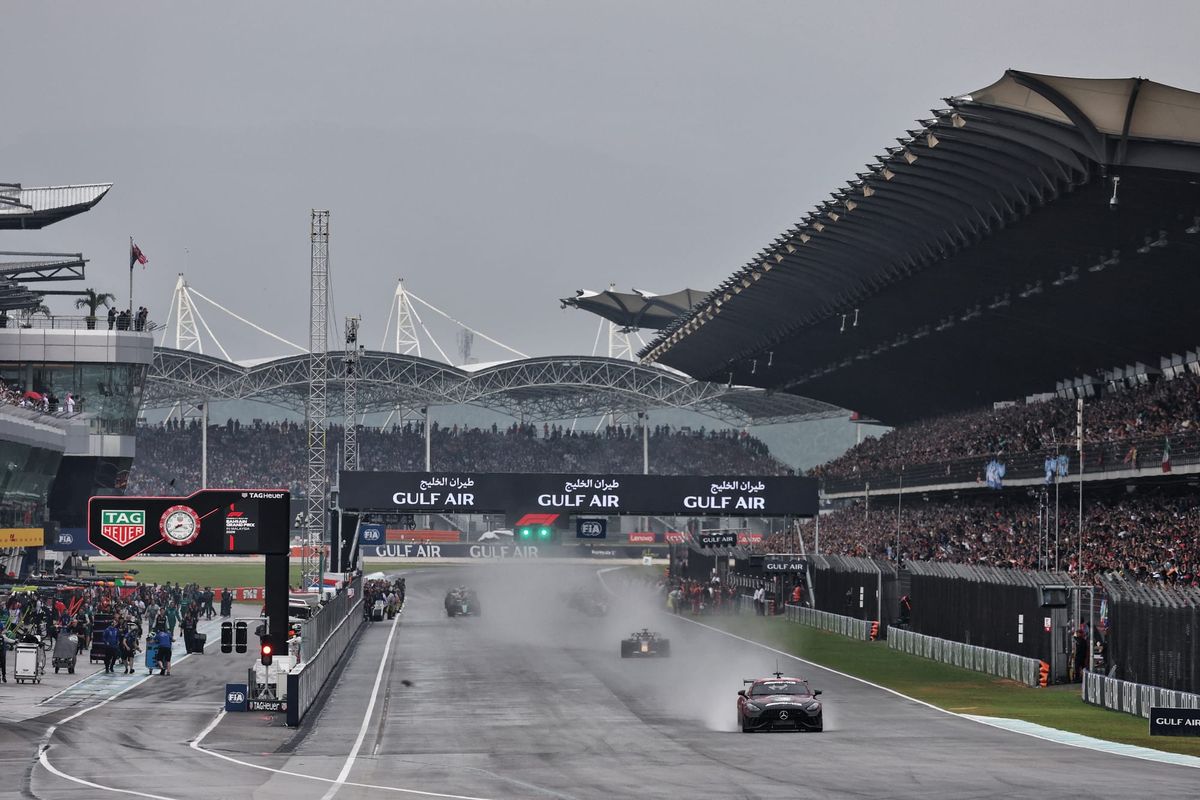
New wet-weather engine software will be introduced for Formula 1’s United States Grand Prix in response to the aborted start debacle in Malaysia last weekend, with an interim measure in place again in Singapore.
After heavy rain delayed the start of last week’s Bahrain GP in Malaysia, it was delayed by a further 45 minutes after a number of cars lost power on the formation lap.
This prompted a suspension of the race start procedure and a lengthy wait as the FIA readied a software update that teams and engine manufacturers were able to integrate successfully.
The problem occurred because some cars were running on such low engine RPM in certain parts of the lap where there was also a 250kW MGU-K power reduction.
This created the combined loss of both internal combustion engine power - as the turbocharger spooled down - and electric power that could have compensated for it.
It led to what an FIA investigation has concluded was “a loss of power beyond the original intent and that could not be recovered in those sectors” - hence several cars slowing, and even coming to a halt and having to wait to regain power.
The FIA has looked into the cause of this, how to mitigate a repeat and manage wet-weather engine settings in the future, and what can be learned from data supplied by teams and engine manufacturers.
It intends to release a further update to wet-weather software for the US GP on October 25 and in the meantime, if it rains in Singapore this weekend, will continue with the interim solution that was produced rapidly at Sepang.
Within five minutes of suspending the race start procedure, the FIA had identified the cause and released an updated software configuration. It provided teams with further technical guidance and clarifications relating to this 13 minutes later - and half an hour after the release of the new software, all teams and manufacturers had completely integrated it.
The fact this patch worked, and will be re-used this weekend, indicates all parties are satisfied it is robust enough although there is a commitment to further testing of such software, where possible, in the future to make it more robust.
The FIA has pushed back against comments “suggesting that the software had not been tested prior to its deployment” - meaning the original configuration, as obviously what was put together on Sunday in Sepang could not be tested in advance on-track.
There were simulation exercises to validate the original software and it was tested in FP1 at Spa and Zandvoort, too.
The FIA’s F1 lead Nikolas Tombazis, who called the Sunday patch “a rushed job” but a “very competent” one, had already said after the race in Malaysia that the first version of the wet-weather software “was tested, it just wasn't tested in those specific conditions”.
“A bug is, by definition, an error,” said Tombazis. “Testing stuff better avoids errors. That's obviously what people try to do.
“Sometimes things fall through the net and people learn, and you do a better job next time.”