This 'fix' wouldn't have saved F1's Spanish GP

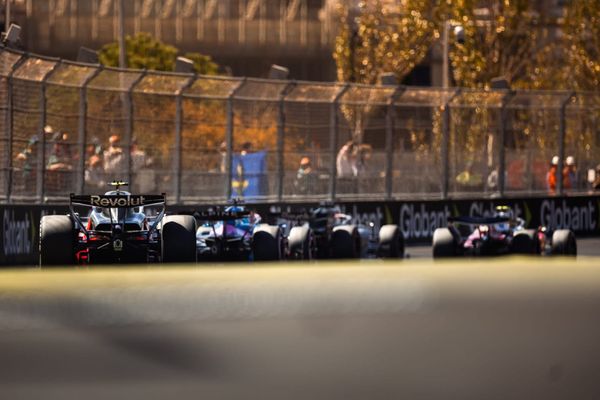
The failure of the Spanish Grand Prix to produce the kind of spectacle offered by other Formula 1 races this year has inevitably focused on the lack of overtaking opportunities around the Madring circuit.
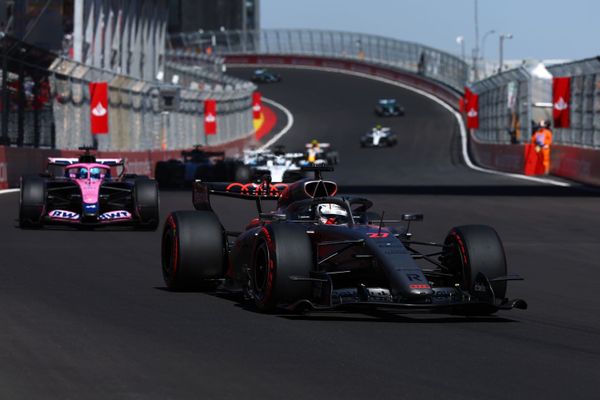
Combined entries, barrier pinch points and a lack of wide, heavy braking zones - especially at Turn 5 - all contributed to making it extremely difficult to pass a rival.
It is little wonder, as The Race revealed on Sunday, that Madring chiefs are already planning changes to three key corners for 2027 with the expectation that next year's race produces a bit more of a show.
But it was not just the track layout that contributed to a lack of action, as another factor in how things played out was that there was not much strategic variation either.
Even the most boring of track layouts can deliver thrillers if tyre strategy gets blown open.
Make the fastest route to the chequered flag unclear and you get teams taking different approaches, plus the kinds of pace offset that create the circumstances for wheel-to-wheel action.
The hard tyre's durability
The Madring delivered one of those Monaco/Sochi-style phenomena where the hard tyre (the C2 compound in Spain) was good enough to last the whole race - as Pierre Gasly proved by waiting until the penultimate lap for his mandatory compound switch to get off what he had started the race with.
After tongue-in-cheek claims after first running on Friday of a potential six-stopper being on the cards, based on the high levels of degradation seen, the transformation into an easy one-stopper was remarkable.
Haas driver Esteban Ocon said the behaviour of the tyres was one of the limiting factors in why there was not much action in the race, because drivers could push on without fear of excessive degradation as long as they did not spend too much time in the dirty air of the car ahead.
"The thing is that it was so consistent, the tyres on the second stint, that as soon as you were following another car, you were losing so much grip," he said.
"When I was doing blue flags to other cars, I was losing half a second, seven tenths easily. And then after it was coming back because it was all about overheating.
"As soon as the overheating was coming down, you had pace again. So that's why there was no overtaking. It was too fast, the pace, basically.
"It was like 120% from as soon as you pitted to the end. And because the graining didn't happen, that's where we ended up. If we had a race on Friday, it would have been much better!"
This outcome has inevitably prompted questions about whether the Madring spectacle would have been more entertaining had the tyre compounds been a bit more on the aggressive side.
Complex influences
It is a nice theory that if you took away the comfort of the thermal and mechanical robustness of the C2 hard tyre the Spanish GP would have been better.
That suggests that, forced onto softer compounds, drivers would have had a more challenging time in having rubber that did not last the whole distance, thereby producing more excitement.
The idea is good, but sadly reality bites when it comes to understanding the complex factors that dictate whether races become strategic masterclasses.
First, there is a notable difference in behaviour and characteristics between the C2 and the C3, which means that, while the hard was good for the whole race, the medium was significantly not as good and much more prone to the risk of graining.
As McLaren's Oscar Piastri said: "The medium tyre was just awful. It was good for literally one lap, but then it was terrible."
Increased degradation does not automatically mean more stops though. It can (especially when overtaking is difficult) lead to more tyre management and cars running well off the pace, and you end up with the same spectacle as we got on Sunday.
Plus, one important element at Madring that will forever speak against multi-stop races is the length of the pitlane.
Swapping tyres there costs around 25 seconds - one of the biggest losses of the season - so teams are always going to try to minimise the need to change tyres.
Tiny differences, big outcome
Based on the evidence from the Madring, Pirelli felt that going a step softer with the compounds - bringing the C3/C4/C5 rather than the C2/C3/C4 - was not a way to improve the spectacle.
That is because, as Pirelli's head of motorsport, Dario Marrafuschi, pointed out, based on the struggles that drivers had with the C3 and C4 in the short stints in which they managed to keep them alive in the race, it would have simply turned the race into a major management drama.
Throw into the mix too that the Madring, thanks to the banked La Monumental and high numbers of corners, is one of the most challenging tracks on the calendar for tyres, then it would also increase the possibility of safety dangers thanks to the high levels of wear.
"It would have been a two-stop race with a high wear," Marrafuschi told The Race. "On paper you can say, 'OK, it must be a two-stopper'.
"But, because of traffic, drivers would just end up doing what Gasly did.
"It was a good choice to have the C2 as a race compound and give teams the possibility to have one-stop in case of an early safety car. The C3/C4/C5 would have been too much."
Going softer would also have caused trouble in qualifying. As it was, the C4 teams took into the fight for grid positions was screaming from overheating doing a single push lap.
The C5 would probably have fallen off a cliff and been pretty useless.
Marrafuschi added: "Even during one lap with the soft, after La Monumental, the overheating of the rear was there. If the soft was a C5, maybe you would run the risk of thermal degradation during qualifying as well. It wouldn't pay the bill."
The reality is that the margins between a race delivering a perfect strategy mix of different approaches, a nailed on easy one-stopper, and complete chaos are sometimes not very much.
With Madrid's track being super-smooth, and offering high grip, teams knew going into the race that if they could avoid the risk of graining, then the one-stop strategy was on.
If not, as one engineer said, then it would instead have turned into a chaotic, heavy-degradation, two-stop-plus graining fest.
While the latter may sound exciting, it actually risks producing something that is equally as bad: one of those grands prix where there is just an endless cycle of stops so the race has no narrative.
Some of the nailed-on elements of Madring - the smooth, high-grip surface, the forces through La Monumental, and the long pitlane - mean that unless overtaking opportunities are improved there is little that can be done to encourage more stops.
All eyes are on what track changes are done next year because opening the door for passes will be the best way to improve the strategy element too.