FIA blames manufacturer resistance for F1 2026 problems
The FIA has pushed back at driver criticisms that it did not do its homework properly and failed to anticipate the scale of problems with Formula 1's 2026 rules.
Instead it says it knew the potential pitfalls well in advance, but that its attempts to head off trouble by making rule changes before the cars began racing were derailed by resistance for change from manufacturers.
Drivers unhappy
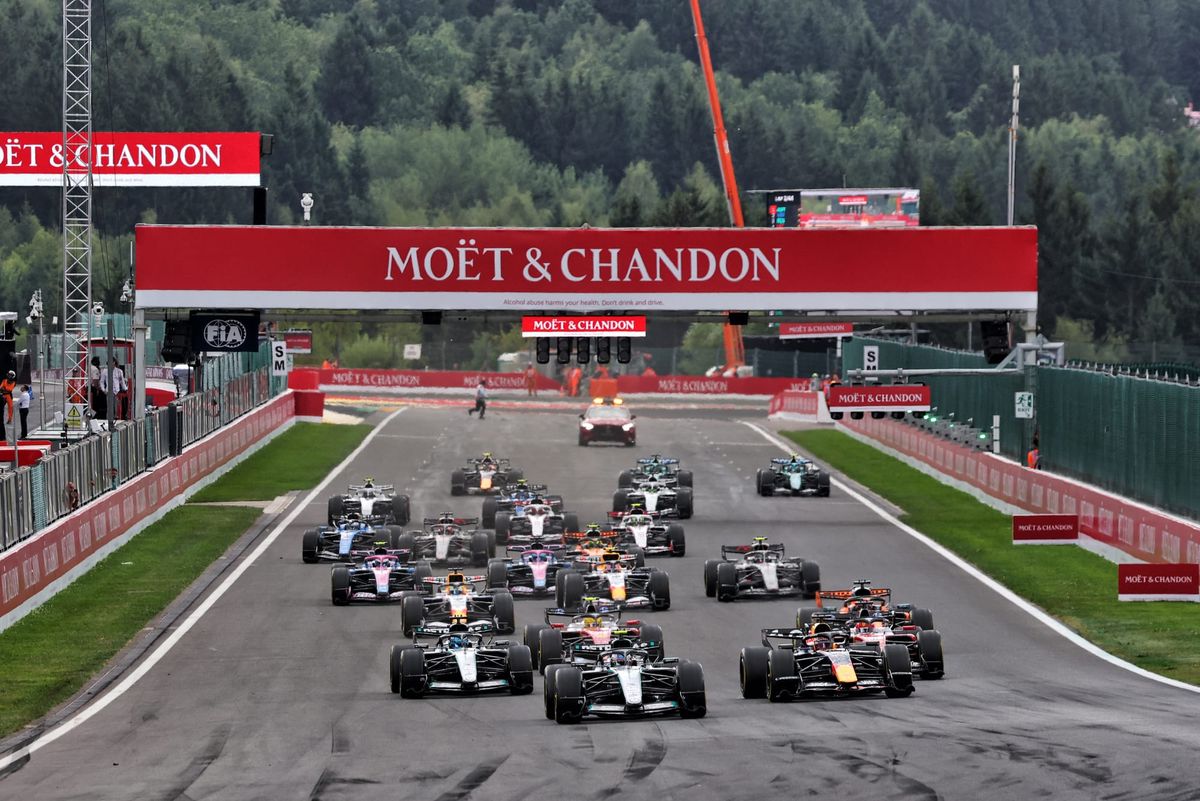
The recent challenges experienced with the energy starved cars at the Belgian Grand Prix triggered outspoken remarks from several drivers about how F1 had ended up in a situation where a classic track had lost its magic.
Grand Prix Drivers' Association director Carlos Sainz said: "Whoever saw these simulations in 2022, 2023 and didn't look at it and say, 'how can we even accept that?' needs to review what happened there because it should have never happened."
Seven-time world champion Lewis Hamilton later added: "I don't know who made the decision, but whoever it is, they've still got their job."
The FIA's single seater director Nikolas Tombazis accepts drivers have been unhappy about many aspects of the 2026 rules, but claims the governing body's hands were tied by F1's governance process in being unable to force through rule tweaks that it wanted done in advance.
As The Race revealed last year, a last-ditch effort in early 2026 to reduce maximum deployment in races to 200kW with the new rules was dismissed.
Tombazis said about drivers' criticisms: "I think drivers are, by definition, quite demanding clients. So I don't think we expect them to have a sugar coat or to not speak their mind.
"We did anticipate a lot of these things they have complained about in the two years before the launch of the season, and we did try to make some adjustments.
"But we failed with the governance that was in place. So I think it was realistically only to be expected."
Manufacturer support required
As part of an agreement reached to look after the interests of both current and new manufacturers in the build-up to 2026, a Power Unit Advisory Committee was set up, which dictated how rules could be changed.
For major tweaks to be made, it required backing from the FIA, FOM and four of the five manufacturers at the time – which was quite a high bar.
Tombazis insisted that such a framework was essential to keep things equal between old and new entrants, but it did mean compromises.
"If a PU manufacturer who was not participating in F1, let's say Audi for example, they still had to be bound by regulations.
"They could not come to us and say, 'well, you know we're not participating, hence we can spend five times the money, for example'. That would have been unfair.
"So that's why there was a governance agreement that, on the one hand, forced them to be bound by the regulations, including the financial and operational, and all of that.
"But on the other hand, it puts limitations as to how much we can change things unilaterally as the FIA.
"Therefore any change had to be approved by a significant number of the PU manufacturers, and so for the sort of changes we did, we needed at least four of them to agree.
"Quite simply, four of them did not agree during the years when we discussed adjustments."
Missed opportunities
F1 did eventually react at the start of the season to the issues that were encountered in the early races, with a host of emergency measures to improve energy management introduced from the Miami Grand Prix in May.
Furthermore, a roadmap has been agreed whereby F1 will shift away from its nominal 50/50 power split between internal combustion engine and battery power towards 60/40 by 2028.
But even though change has now received support, Tombazis says there is an element of disappointment that these things were not in place before 2026 started.
"I think it's a bit of a shame that we had to wait until then. We discussed things in May to get the package for '27 and for '28.
"I think we could have ideally done that a couple of years before, and then there wouldn't have been all of this discussion."
Not all bad
While there have been issues with the rules, Tombazis does not think that the spectacle has suffered much.
And he senses encouragement from the fact that, unlike in previous rules era, there has not been a total whitewash of dominance from one team or manufacturer.
"Most races have been pretty exciting, I would say," he said. "There's been quite a lot of fighting.
"While we do have a clear advantage for one manufacturer, in the past when we've had this at an early start of regulations it has been very processional.
"And now I think, despite the fact Mercedes has been doing most of the winning, the races have nonetheless been quite exciting, with quite a lot of [position] changes and so on.
"So we need to look at the balance of things. Clearly, drivers are important stakeholders in the sport. So, therefore, I think we've done the right thing by listening to them a lot and taking actions.
"But I think we also need to think about the spectators as well, and that they want to see changes and exciting races and so on."