F1's divisive wet weather tyres to change in 2027 - what needs solving
Formula 1 tyre supplier Pirelli is close to finalising new specification wet-weather tyres for next season that already address concerns drivers voiced last weekend.
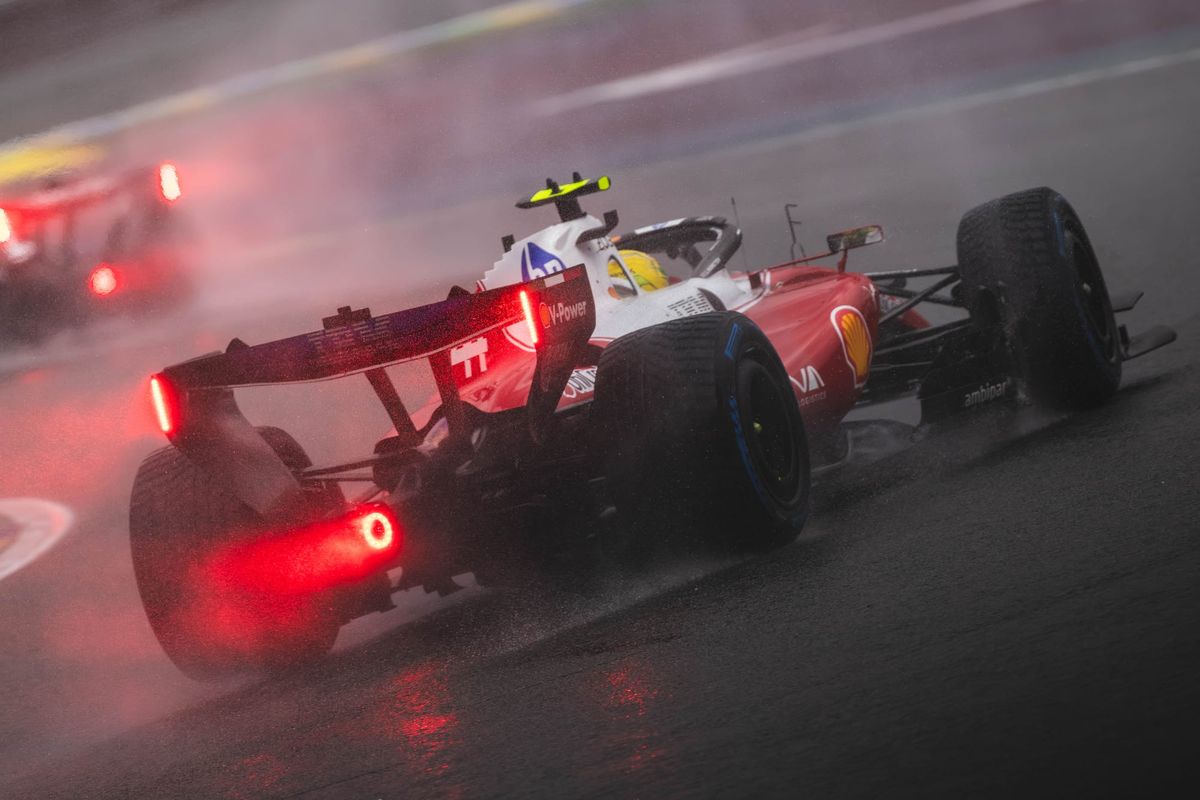
F1 had its first proper wet weekend of the year at Interlagos, with both qualifying and the race impacted by the rain.
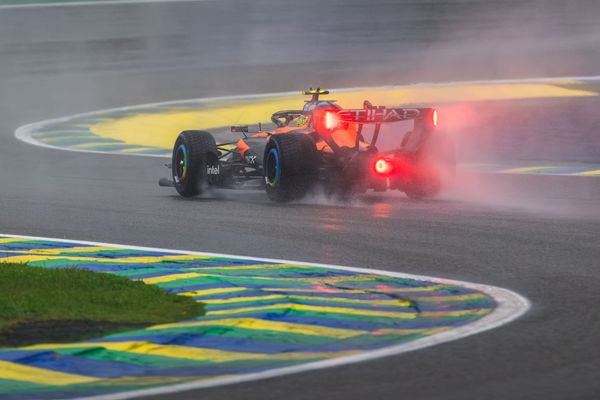
Saturday’s running took place in conditions that were so extreme that the wet tyre, which has rarely been used in recent years, became the preferred choice for the conditions.
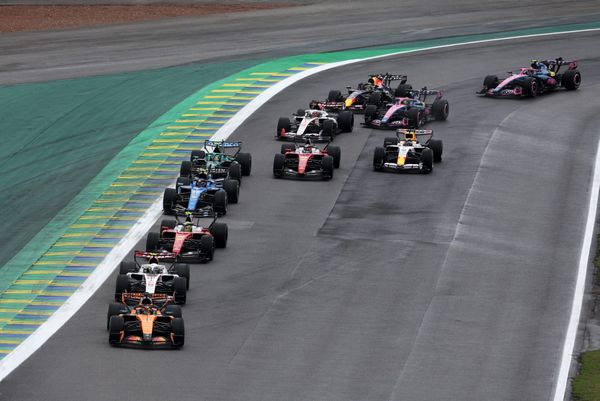
The race on Sunday was hit by showers, with drivers starting on intermediates, shifting to slicks and then reverting to inters towards the end when the rain returned.
But despite there being no major incidents – and the race being the first this year not interrupted by either a virtual or full safety car – drivers were still unhappy with how the wet rubber behaved.
Williams driver Carlos Sainz called for work to be done with Pirelli to deliver improvements in the future.
“The level of the wet and the inter is not good enough and we need to work with Pirelli on finding a better tyre,” he said.
“In the mixed conditions, the inter is still a very weak tyre at the rear, by the time it warms up the front is gone.
“And the extreme [wet], honestly, we had so much aquaplaning and a big lack of rear grip. So still missing a bit of development on these two tyres.”
The biggest challenge that drivers faced with the intermediate tyre on Sunday was getting them up to operating temperature.
This proved especially challenging on the low-speed laps to the grid, where a number of drivers were seen battling to keep their cars on the track.
And things weren't much better in the race, as Racing Bulls' Liam Lawson said it had been a real challenge to get the tyres into the right operating window.
“The biggest problem was the temperature was much cooler,” Lawson said. “So even though there was less water on the laps of the grid, the cars were nearly undriveable. And the temps were just going down.
“We survived the start of the race, but at points when it rains a lot, it's not that the standing water is too much; it's that you can't actually keep the temperature in it. So, if we're on a track like Vegas and it rains, honestly, I think we're in trouble.”
But it was not just the fire-up that was a problem, as the inters proved very delicate in the race too.
Alex Albon, who described the laps to the grid as “insane”, said things were not much better once the tyres were up to temperature.
“It just feels like they never overheat or they never get up to temperature," he explained. "Then by the time you're circulating, the tread's already come off the tyre and then you're already struggling, you're sliding around.
“So you never feel good at any point in the race; it never feels like it comes alive.”
Why the intermediate tyre feels worse
One of the common themes across this season is that the intermediate tyres feel worse than the previous version.
Alpine’s Pierre Gasly, who has long been sceptical about the inters ever since he tried them out at a wet test earlier this year, feels like they don't give as much confidence to push on as their predecessor.
“Generally, I must say they feel very poor,” he said. “The grip, I don't know if it's only with our car, but compared to the inters we used to have in the previous years, it just feels like they're nowhere. Extremely poor grip.
“The last stint felt [in Brazil] like I was driving on ice. So I want to review exactly what happened with our car. I don't know if it was the case for everyone, but it's genuinely not a very good tyre.”
Gasly's point is well-founded because Pirelli has had to design a tyre for the 2026 rules that is theoretically a step away from what is ideal.
The switch between straight mode and corner mode at the end of straights puts huge forces through the tyres, plus Pirelli needs to ensure its product can cope if active aero fails and cars are running down straights with maximum downforce.
So in a similar vein to how straight mode consequences have forced increases in minimum slick tyre pressures, Pirelli had to make a more robust intermediate tyre.
Furthermore, the minimum pressures have also gone up for wets and inters. In Brazil, for example, the minimum front pressures went up from 25.5psi last year on the inters to 28psi now, and on the wets from 22psi to 26.5psi.
The impact is a tyre that does not move around as much - which does not inspire confidence from the drivers to lean on and is also much harder to warm up.
The circumstances of the rule changes are something that Haas driver Ollie Bearman referenced in Brazil.
“They are definitely a bit worse than last year’s ones,” he said. “There’s a few more parameters that the manufacturer has to put in mind when they design these tyres, because of the straight mode, ride heights and things like that.
“The tyre feels a bit less forgiving: very stiff, very hard to warm up. Lap 1 was a big challenge. It’s a warm-up thing again for us, same as yesterday in quali.”
And while drivers did manage to get through the Brazilian weekend, Interlagos has a rough track surface and a twisty infield section that helps put temperature into the rubber. That may not be true at all venues on the calendar.
As Mercedes driver George Russell said: “I think it's important also to realise the three tracks driven on were very rough tarmacs and Malaysia was hot even in the rain.
“Singapore sprint race was still hot and [Brazil qualifying], even though it was raining, it was 30 degrees and the track was 30 degrees. Maybe in 15 degrees of Spa, we're giving different feedback.”
What Pirelli is looking to change
Pirelli always knew that it would need to fine-tune its wet tyres to the real 2026 cars, with the current designs having been based on feedback from mule car running last year.
It had planned a wet test in Bahrain in February to help it work on understanding things better using an artificially soaked track, but that had to be abandoned in the wake of the Iran war beginning.
Further wet weather tests over the season have been completed, which has put Pirelli on a path to introduce revised inters and wets for next season.
While Pirelli motorsport boss Dario Marrafuschi does not want to reveal too many specifics about what is coming for 2027, he has confirmed that the warm-up issues on the inter will be addressed.
“Tyre development is going ahead and we have a different spec for next year,” he told The Race.
"Some of the drivers were complaining about warm-up, so we have been working for next year on the warm-up phase, on the intermediates.”
He added: “It doesn't mean we are not satisfied with this year's specs because we had very good racing in Malaysia, in Singapore and in Brazil as well. But an optimisation can be done.
“We always listen quite openly to the comments of the drivers."
The final homologation of the wet and inter tyre designs with the FIA will be made in December, when more details will be revealed about what is changing for next year.
But Marrafuschi also believes there is an element that, in the meantime, teams will get a better handle on how to get more from the inter now that they have some proper experience of it.
He thinks what was highlighted in Brazil was how some squads and drivers seem to have had a better understanding of what was needed than others.
“Clearly there are some cars or drivers, some set-ups or whatever, that are more comfortable in one condition or the other," he explained.
“We saw in the beginning of the race, Lewis [Hamilton] having an astonishing performance, with zero warm-up problems at all.
"We know that other drivers, since the formation laps, were complaining about the front-end warm-up. So, there are some tunings that are in the hands of the teams.”