F1 2026 has neutered Albon's biggest strengths
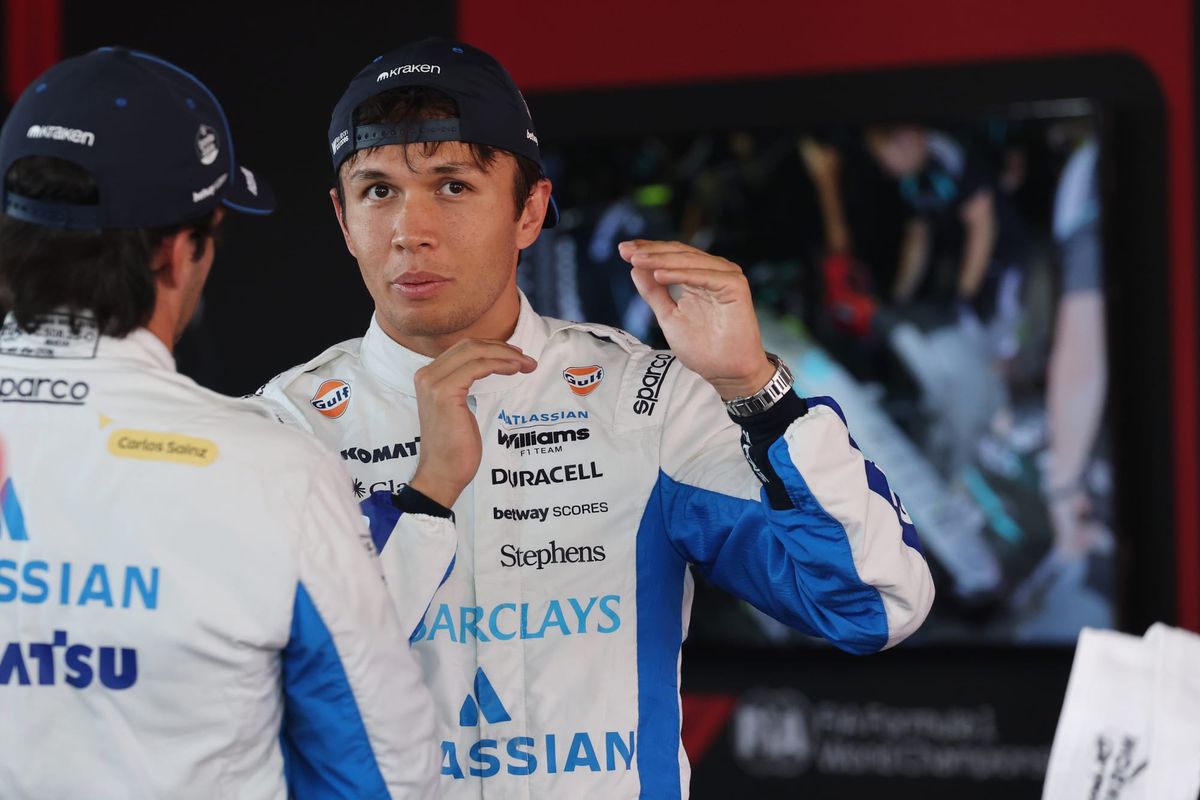

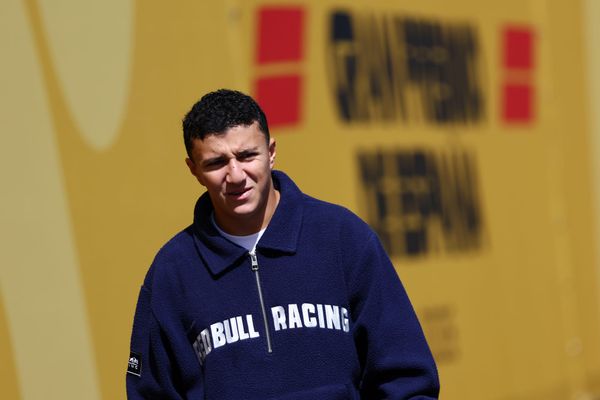
Newly recommitted Williams Formula 1 driver Alex Albon believes the 2026 regulations have neutered his key strengths in a way that might partly explain his tricky season.
Williams’s season so far has fallen well short of lofty expectations, meaning Albon and his team-mate Carlos Sainz have rarely had a chance of fighting for points.
But Albon in particular has struggled, having been outqualified 12-1 by Sainz with an average margin of nearly three tenths of a second. Things have been closer in the races and Albon has scored five of Williams’s 11 points, but there’s little doubt Sainz has been the stronger Williams driver this season, having been closely matched with Albon in their first year together last season.
Unpicking exactly why isn’t easy though, given Williams has had myriad reliability issues and performance consistency problems as well as a slower-than-expected car.
Plus the 2026 regulations and the power unit quirks that make it difficult to confidently assess which drivers are doing the best job, especially with the emergence of deployment issues like the one Mercedes revealed after Spa last month that had been affecting George Russell.
“Honestly, it's really hard to pinpoint,” Albon replied when The Race asked him in Hungary how much of his 2026 performances so far have been within his control.
“There's so much going on. I think there's multiple factors. If you just take what's happening to George and Kimi [Antonelli], that's not a single car, single team issue.
“You can imagine if the works team was struggling with it, it definitely happens to the customer teams as well.
“I can count quite consistently on qualifying sessions, even in Spa, where you should be in front and you're not. There are elements to that.
“There's elements also to ourselves as well. I think Williams, we are in the process now of understanding, but Carlos has had this issue too, where it's hard for us to understand.
“There's differences performance-wise, session to session, weekend to weekend, which we've sometimes accounted for, sometimes not.
“It's not been the cleanest of starts of the year for me.”
Albon, now recommitted to Williams until the end of 2027, feels he’s still getting to grips with what’s needed to be quick in these cars. And he fears they may have neutered key strengths of his.
“There are elements where I do think these regs are away from my strengths,” Albon said.
“Things like, there is no high speed [corners] anymore. I always consider high speed as one of my strengths, but whenever a corner is high speed, it's now either flat itself, like it was in Pouhon [at Spa], or we're just arriving so slowly now that they're not high speed.
“Then there's also just trying to understand these regs. Cars, these tyres, they're quite sensitive.
“At the moment, I haven't really found the sweet spot with them. Sometimes I can do OK, but generally speaking, it is tricky. It's a different driving style, for sure.”
It’s true that the 2026 cars have shifted in where a driver can make a difference outside of the usual parameters, like late braking or commitment and approach to high-speed corners.
You only have to look at telemetry traces to see the time won and lost between team-mates at places such as Silverstone and Spa, is due to deployment differences at the end of straights and out of corners, rather than corner entries.
And unpicking what can be explained by the quirks of the power unit and what can be explained by the driving inputs has been a big headache for many for the likes of Albon, Russell and Charles Leclerc.
“It's very psychological this year, in that sense, because there is no easy thing,” Albon said.
“As a team, we're also fighting [with] extinguishers. We have little fires that we're trying to put out, so it's hard to differentiate what's you and what's the car and what's what.
“So, all you can do, which is my approach for the last three or four races, is just purely focus on the driving and let engineering do engineering. If you think you've done a good job, you've done a good job, and leave it like that.
“It's a very simple approach to going into a race weekend, but it's actually something which I feel like my last few weekends, my performance has got a lot stronger because of doing that. I think as the year goes on, it's almost like a cross list. We just cross out, fix problems, and get to the next one.”
The ‘focus on the driving’ also has echoes of Russell’s comments earlier this season when he was frustrated that the driving style he’d used for his entire F1 career so far didn’t work with the 2026 cars.
“Every driver is very open to, if there's a reason why, for example, why you're slow on a straight or whatever, tell me and I'll adapt to it, and I'll figure out a way to drive around it,” Albon explained.
“Sometimes, though, it's very complicated. I can even remember Silverstone. You're in between qualifying runs, trying loads of different things, different styles. I think that it takes the mind away from just driving.
“I've said this before, but you've only been taught to drive quickly your whole life. You know what is quick. Suddenly, there's a layer that's this grey box in the back of your head that's like, ‘well, if I do this differently, does this help the laptime in a different way?’ kind of thing. It's not instinctive or natural.
“Then, again, it goes back to the question before of just drive and let engineering do engineering.”