Michelin makes major Motegi tyre decision after sprint dramas
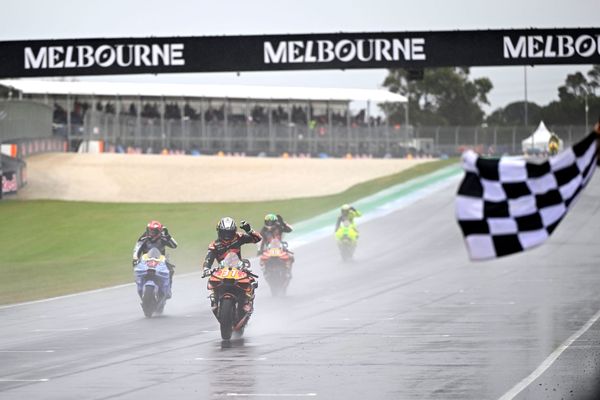
Michelin will remove its softest rear compound from the allocation for Sunday’s Japanese Grand Prix following multiple instances of tyres blistering during Saturday’s half-distance sprint race at Motegi.
But it will not, despite lobbying from some teams, make its emergency hard-construction tyre mandatory for the race.
It became apparent during the latter stages of the sprint at Motegi that numerous riders were struggling with their rear tyres delaminating, something that was predicted as a possible concern on the newly-resurfaced Motegi asphalt.
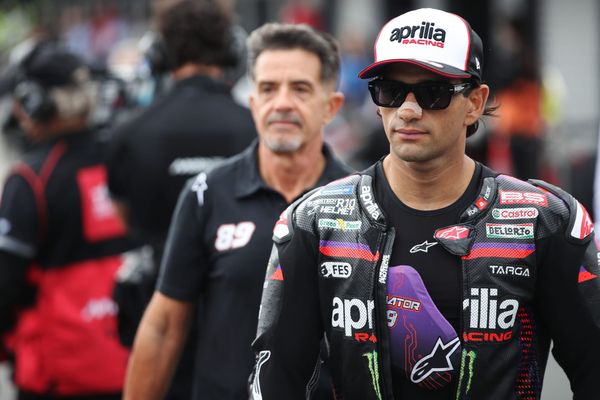
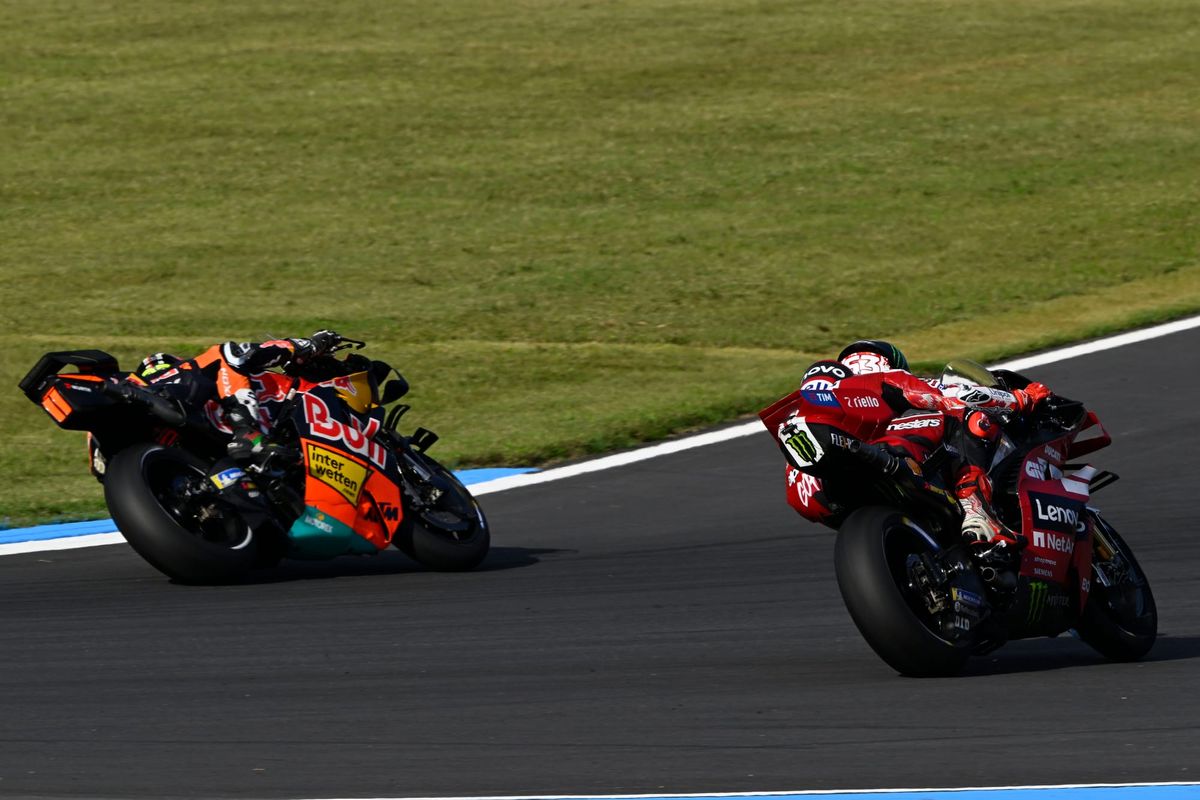
Pecco Bagnaia was forced to retire from the race with one lap to go, while championship leader Jorge Martin was lucky to hold on to a podium place, finishing the race missing pieces of the rear aerodynamics of his Aprilia after they were shattered by his disintegrating rear tyre.
That delamination, a symptom of low wear and high grip that causes a build-up of excess temperatures, was something that Michelin had predicted might be an issue - with the French firm coming prepared with a third rear option using the special construction designed to cope with the high heat that similar tracks like the Red Bull Ring force onto the tyre.
“With the new asphalt we never tested here,” Michelin boss Piero Taramasso exclusively told The Race after the sprint. “We know Motegi is a demanding track, and that is why we decided to bring a third rear specification.
“In the meeting on Thursday, we already spoke with the riders and the teams, and told them to be careful and to check the temperature of the tyres. It [the soft rear] was at the limit, yesterday and this morning, almost for everyone, but we said 'OK, for 12 laps, we can try it.'
“After the sprint, there were three bikes with quite bad blisters. The blistering is when you generate a lot of heat inside the compound. The construction stays intact, but you get bubbles inside the compound and it opens up and makes holes.”
It’s believed by The Race’s sources in the paddock that a number of teams subsequently called for Michelin to make the aforementioned hard tyre, brought specifically for this situation, mandatory for Sunday’s race.
But these teams have not managed to persuade Michelin to take that step - given that, according to Taramasso, a number of rivals had no issues on Saturday.
“We know that in the sprints,” he told The Race, “the riders don’t manage anything, they just go full, so probably the situation tomorrow will be a bit better.
“We spoke with Dorna, and the decision for the race is that the rear soft won’t be allowed, and they will have to work with the medium or the hard one. The Michelin suggestion, we really strongly suggest to use the rear hard. That’s why we brought it here, but now it’s up to the teams and the riders to decide.
“There are some bikes, like the KTMs, some Hondas, that don’t have the problem. They manage well to not put a lot of energy in the tyres, and we don’t want to penalise them and oblige everyone to go with the hard, even if we suggest it very strongly.”
That is likely going to leave a number of teams in something of a dilemma for the main race, though, given that Jack Miller - one of only two riders alongside Marco Bezzecchi to use the medium in the sprint - also experienced similar blistering issues.
“We had two mediums on track,” Taramasso added, “and Marco was clean but Jack had some blistering, too. The medium is stronger compared to the soft, but if your bike’s setting is not optimum and you have some more spin, then what you have to do is do everything in your power to limit the spin and put less energy into the rear tyre.”
The decision not to make the hard tyre mandatory will come as welcome relief to some, most notably sprint race winner Marc Marquez, whose factory Ducati has struggled all season to use the heat-resistant rear construction, conceding valuable championship points last time out at Austria to the factory Aprilia duo of Martin and Bezzecchi.
Given the hard option has been roundly ignored by teams so far in practice this weekend, Sunday's warm-up has been extended from the customary 10 minutes to 20 at Michelin's request, "in order to allow all riders to evaluate" the hard tyre.