Why wet Canadian GP prospect unnerves F1 drivers so much
Formula 1's Canadian Grand Prix is at risk of turning into an "elimination game" if forecast wet weather on Sunday sticks around until race time.
What has been labelled a perfect storm of circumstance could inject some extra chaos and a potential curveball in tyre choices should the bad weather linger.
The current forecast points to rainfall arriving at the Circuit Gilles Villeneuve early on Sunday morning – with steady mist and light rainfall throughout the morning and into the early afternoon.
While the intensity of rain will taper off towards race time, the cold temperatures that are predicted – around 11C – will result in mist sticking around and the track not drying out.
It points to conditions that drivers, already mindful of the challenges of racing the current power units in the wet, think will be extremely challenging.
Alpine's Pierre Gasly, who conducted a wet tyre test for Pirelli after the Miami Grand Prix, said: "I wouldn't be surprised if we end up having a bit of an elimination game. But I might be wrong.
"Just this track by itself in the dry is difficult to warm up the tyres. So I think in the rain it will be extremely difficult."
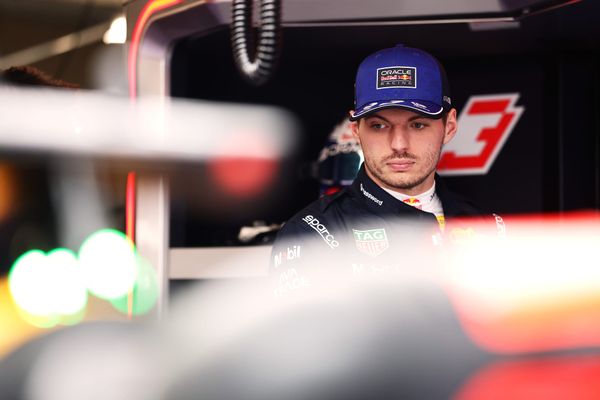
Max Verstappen, who also has experience of 2026 car wet running because Red Bull was one of two teams to run in the rain during the pre-season Barcelona test, expects huge difficulties.
"Even on slicks, you barely switch them on at the right time" he said. "So on wet tyres, I think it will be a big struggle for all of us to make it work."
The FIA could face a conundrum on how to manage things, because keeping drivers behind the safety car for longer periods to try to reduce the chance of incidents could make things worse for everyone in terms of cooling tyres down.
As Verstappen said: "It's almost like when there is an incident, you don't want the safety car, you just want a VSC or something for us to at least get a bit more speed in other places. But it's going to be tricky."
The tyre curveball
The situation could be so extreme that F1's long-derided wet tyres could even be the better option than the preferred intermediates on even a damp track.
For years now, the inter has been the no-brainer choice to take in rain-hit races – with there being only rare occasions where the more extreme wet is better.
This is primarily because when conditions become so bad for the wet to be better, track running is often suspended because visibility is so poor – so there is little incentive to use them.
It was often remarked that the wets were effectively only 'safety car tyres'.
But the Canadian GP could buck that trend thanks to a host of circumstances coming together that could force drivers away from the intermediates due to the risk of them dropping out of the operating temperature window.
This is due to the dual impact of both the track layout and the cooler than normal weather conditions.
The layout of the Circuit Gilles Villeneuve is very low energy – with no high speed nor long duration corners that are useful for generating heat in the rubber. The surface is also very low grip.
Things are further exacerbated by the long straights that make it a struggle to keep temperature up.
Added on top of this is that, with the Canadian GP having been moved from its usual June slot to a May date, the weather is cooler than it has been at the event in the past – further exacerbating temperature headaches.
Current tyres are not designed around running when things are so cold.
The combination of low energy and low temperatures has left F1 tyre supplier Pirelli convinced that the wet tyre may become the default choice.
Chief engineer Simone Berra said: "I think it is the perfect storm because we have cold temperatures and a low energy circuit. If it rains here, it will be complicated.
"We never had these conditions. We never designed the tyres for these conditions, because it's very cold, and it can be tricky."
Berra explains that the wet compound could be better because it not only has a deeper tread depth – so there is more rubber that can retain heat – but it also has a lower operating temperature as it is a softer compound so could be easier to switch on.
"I guess the wet will struggle a little bit less," he said. "It is a possibility that we could end up that the wet is, for one time in the last few years, faster than intermediates."
Blankets no help
Getting temperature into wet tyres is critical to making them usable and at the recent Miami Grand Prix, where severe rain had been forecast but never materialised, efforts were made to help on this front by lifting blanket temperatures.
It was agreed that the intermediates would be heated up to 70C, with wets to 40C, to help drivers be able to switch them on easier.
But Berra thinks that the situation in Canada will not be helped by this as the headaches are about keeping temperature in the tyres, rather than getting it there in the first place.
So even if tyres were made ever hotter coming out of the pits, things would ultimately not be much easier.
"We could increase the blanket temperature to 140 degrees, but if you lose temperature and reach 50 degrees, then you gain for the first, second or third laps, but then you end up in a very similar situation.
"It's always a matter of the energy you are able to generate and to put into the tyres and how you generate the grip and the temperature."
He added: "If you start losing temperature, and you never find a way to generate the temperature to regain it, then it becomes a problem because you start to struggle, and you have no grip.
"So, basically then you cannot run with these low temperatures. So that's why, in my opinion, the wet can work properly here."
FIA to be cautious?
All the elements coming together has left Grand Prix Drivers' Association director Carlos Sainz convinced that the FIA will take a cautious approach to race management.
He has called for fans to be patient with how things unfold, as this may mean not letting the race run in conditions that some will think are safe.
"I think the FIA will take caution in their approach, which I think all drivers are backing right now - on how they will manage the rain situation," he said.
"I kindly ask you guys in the media, and maybe the fans, not to be too pushy.
"It's the first time with these cars, with the speed differentials we see, and a set of inters and wets that haven't been fully developed for these cars, that we will go and check out a very, very cold, very difficult track.
"Don't be surprised if the FIA plays it safe."